Meknes – Morocco
The city of Meknès was founded in the 10th century under the name Meknassa ez Zeïtoun by Zenete Meknassa, a large Berber tribe originating from the Oriental region. In the 8th century, the province of Meknès saw the birth of the first dynasty of Morocco, the Idrissids (786 to 917, founded by Moulay Idriss I, a descendant of the Prophet Sidna Mohammed). In the 11th century, the Almoravids fortified the city conquered by the Almohads who built mosques, hammams (Moorish baths) and kasbahs there. Meknès then experienced a period of prosperity that was followed by the rise of the Marinids. Many monuments were also erected under that dynasty’s rule, including a royal palace and the famous madrasa Bou Inania.
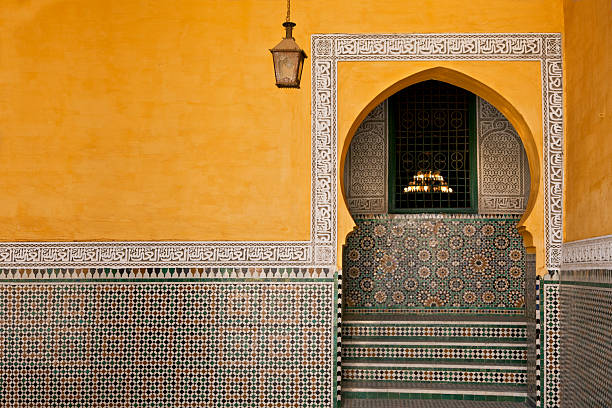
Under the reign of Moulay Ismail (1672-1727) the city of Meknès was elevated to the status of capital of Morocco. He had been captivated by the beauty and wealth of the country, as well as by the purity of its air and waters. He had new sanctuaries built adorned with very beautiful minarets decorated with arcatures. The saints of the land were not forgotten: several mausoleums were restored and renovated. The imperial city, entirely constructed under the reign of Sultan Moulay Ismail, is imposing both for its extent and for the mass of its walls and gates. It is of Hispano-Moorish inspiration, both in its layout and in its buildings and decoration.
The historical heritage of Meknès has been recognized as such since the beginning of the 20th century and is part of the monuments, sites and areas listed as “national heritage” in Morocco.
Still today protected by some forty kilometers of walls, it has preserved imposing monuments, including numerous mosques that have earned it the nickname the “city of a hundred minarets“. Among them, the Great Mosque, probably founded in the 12th century, is remarkable for its doors with finely carved canopies. Its medina and the remains of the royal palace have earned Meknès a listing as a UNESCO World Heritage site.
In the Hispano-Moorish style, the city is impressive in its size and construction. It is encircled by high walls pierced by monumental gates and contains the palace with its impressive stables, a military academy, vast granaries and cisterns.