Chefchaouen is a city located in the northwest of Morocco in the mountainous ranges of the Rif.
The name of the city comes from the Berber achawen, meaning “the horns”, because of the mountainous peaks that dominate and surround it.
The town is built at 600 m above sea level at the foot of the Kelaa and Meggou mountains.
The city of Chefchaouen was founded in 1471 by Mulay Ali Ben Rachid. This city dominates the trade route between Fès and Tétouan, it was used to slow the entry of the Portuguese from Ceuta. Between the 15th and 17th centuries, the city grew considerably with the arrival of the Moors and the Jewish Sephardim expelled from Spain. Today the Andalusian quarter is still one of the most populated of the Medina.
At the end of the 17th century, Moulay Ismail restored the Kasbah to defend the town from the Portuguese and the Spanish. The city was closed to all foreigners, and particularly to Christians, almost until the beginning of the Spanish occupation around 1920.
But at the beginning of the 19th century the first travelers arrived: the explorer French Charles Foucauld, disguised as a rabbi, and the journalist English Walter Harris, disguised as a resident of the Rif, as well as William Summers, an American missionary who died there, poisoned.
Between 1924 and 1926, during the Rif War, General Abd-el Krim managed to expel the Spanish, but they were soon to occupy Chefchaouen again in September 1926, this time to remain there until Moroccan independence in 1956.
Chefchaouen is an ancient town with a great history. Its population had always rebelled against the occupation.
History has permeated its architecture.
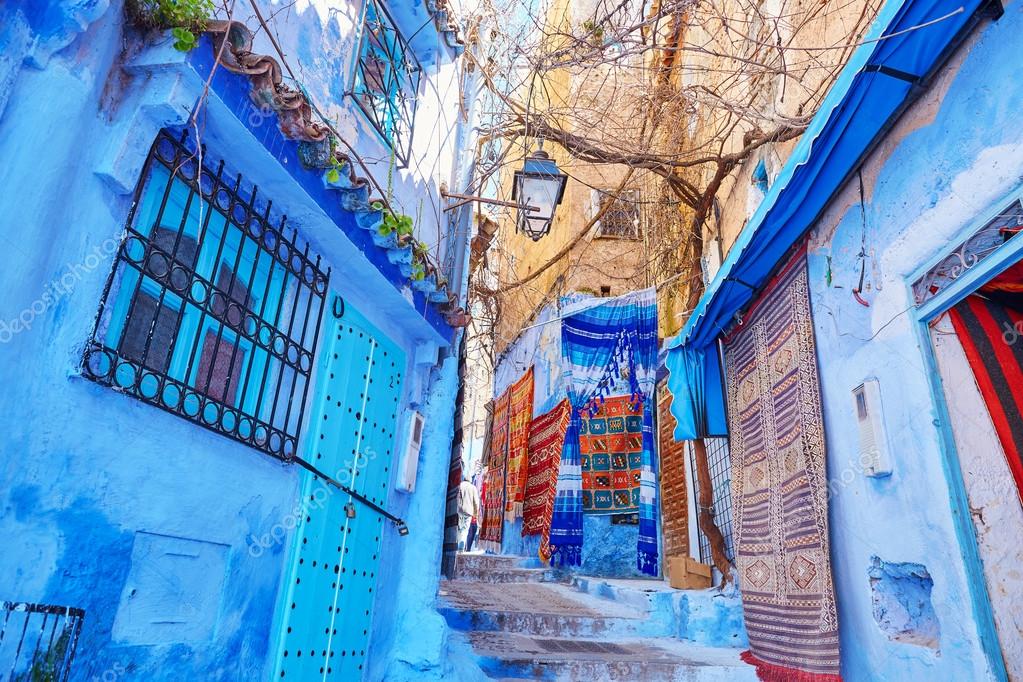
The city of Chefchaouen is known worldwide as one of the most atypical cities of the Kingdom. Its blue and white paintings attract visitors from around the world and make it unique. The blue walls have several meanings:
There is a strong tradition within Jewish communities of painting things blue and of using blue dye to color fabrics, in particular prayer rugs. With the arrival of the Jews from Spain they introduced this color into the city.
Some inhabitants say that the blue helps keep their homes cool during the hottest months.
Some believe that shades of blue adorn the city to help deter mosquitoes. Although mosquitoes generally choose to live near water, they do not like being in the water itself.
The city has left its mark on the world and on the Moroccan culture.