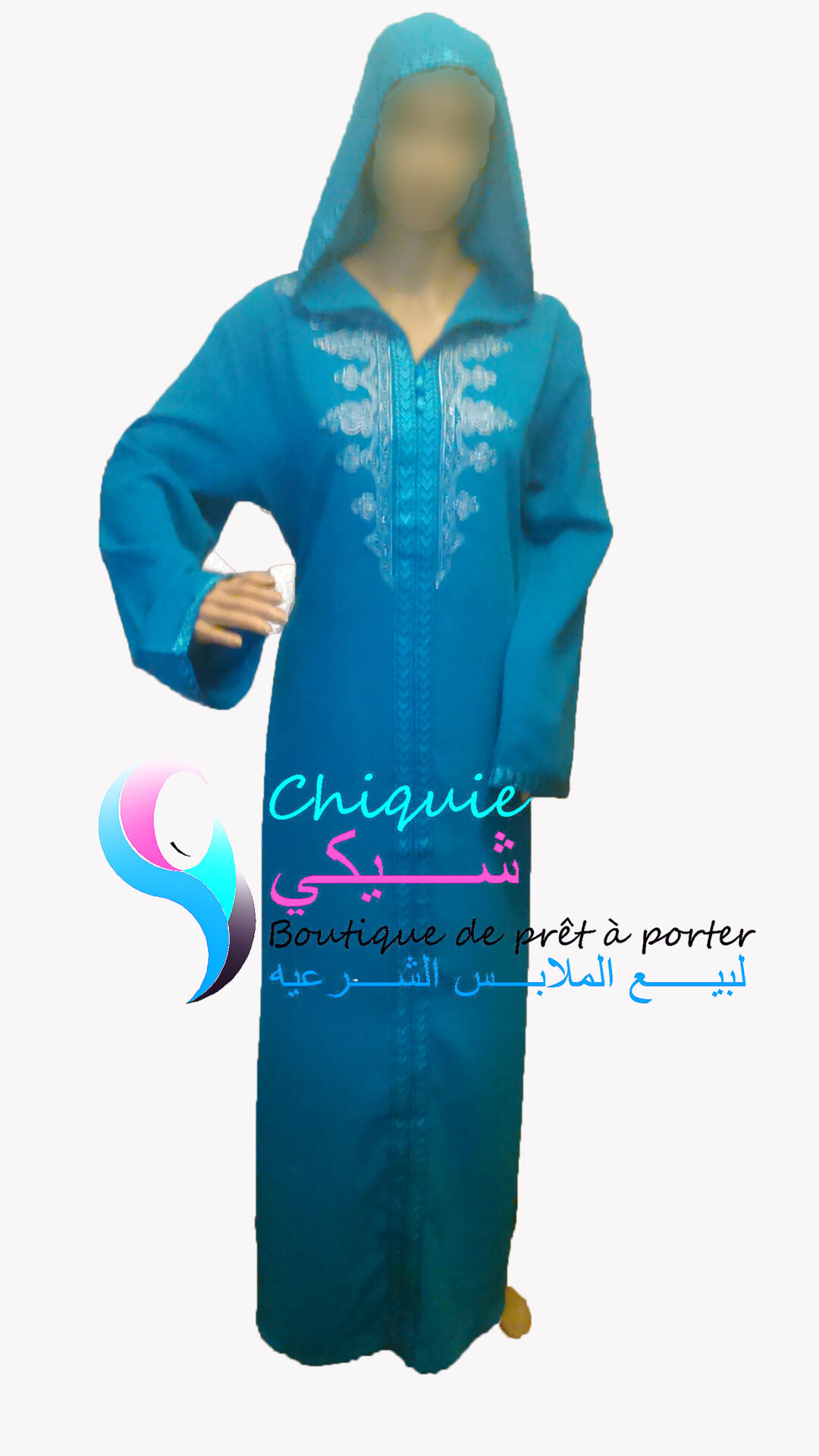
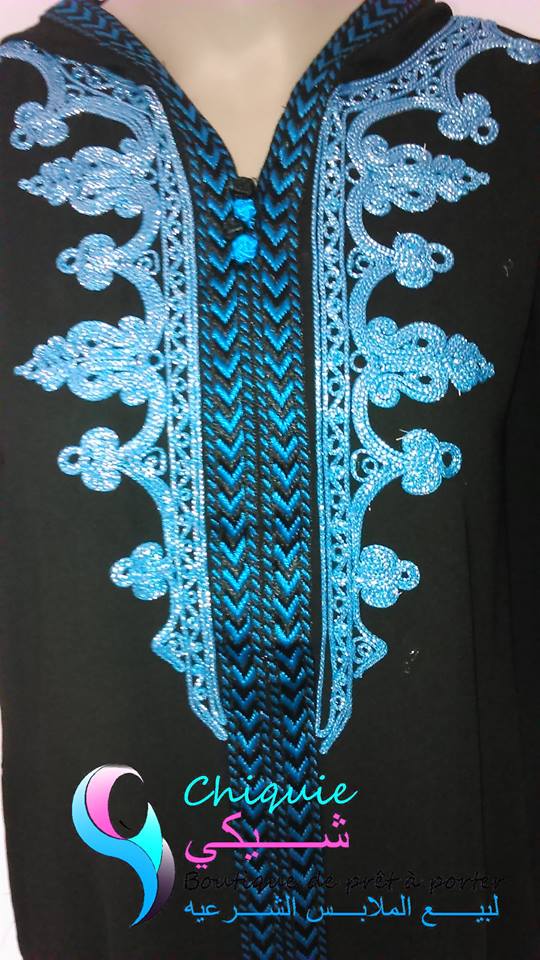
EMBROIDERED ABAYA
In Morocco, embroidery is an art that is an integral part of the culture. One finds embroidered garments, embroidered sheets, or towels… Embroidery is present everywhere.
Now, let us return to the point of origin of embroidery.
Indeed, embroidery has existed since very remote times. The oldest known embroidered fabric comes from Egypt! They were, like several Mediterranean peoples of Antiquity, talented embroiderers.
However, few examples of embroidery from that era remain, and the history of this art is difficult to reconstruct before the 6th century AD. Fine embroidery also developed in Persia, Babylon, Palestine, and Syria.
Moreover, Moroccan embroideries are of Hispano-Moorish origin.
Those of Tetouan are the best examples. This origin is explained by the fact that, after its destruction in 1401 by the King of Castile Henry III, its inhabitants were exiled to Spain.
One observes that, after the fall of Granada in 1492, refugees from Cadiz, Baeza, and Almeria—whose weavings were famous—resettled in Tetouan, bringing with them the tradition of Hispano-Moorish embroideries with Coptic and Eastern origins. In Tetouan, one should also include Fes and Sale.
Obviously, Fes, an intellectual and refined capital, produced monochrome silk embroideries on fine fabrics executed with counted stitches on a frame. These embroideries have a great similarity, and for good reason, with those of Andalusia. As for Sale, it offers refined embroideries. These are counted-thread works, with a monochrome reverse or in two or three tones.
Fes is also renowned for its silk embroidery on linen and cotton, for its gold-thread embroidery on silk or on cotton or satin veils decorated with metallic threads
But Meknes is also known for its warm-colored embroideries executed on muslin supports.
As well, Rabat stands out for a wide repertoire inherited from Andalusia.
www.chiquie.fr


