Couscous is an iconic dish of the Maghreb. According to historians it would have appeared 3 centuries before Jesus Christ among the Berbers of North Africa.
In Morocco couscous is an essential dish; it is part of Moroccan culture.
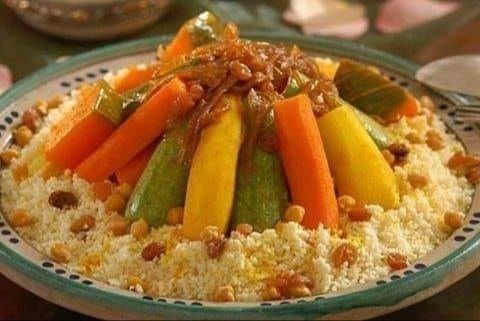
Couscous, in Berber seksu or keskes in Arabic, is partly a durum wheat semolina prepared with vegetables, spices, oil and meat (red meat or poultry) or fish depending on the region.
Couscous was officially declared a “Common Maghrebi Heritage.” And more recently, a project aims to list it among the common heritage of humanity by the UN (United Nations).
Couscous is among everyday dishes; it is also enjoyed on major occasions such as weddings, engagements, baptisms, circumcision, religious festivals…
It is also a dish of sharing and conviviality. In Morocco every Friday many families give a plate of couscous to neighbors or drop it off at the mosque for anyone who would like to taste this wonder. This dish is considered the best way to offer food to people in need.
Couscous is the symbol of the solidarity and of sustenance. It is enjoyed by everyone in Morocco and is indispensable in Moroccan households.
These origins are very distant. It has existed for several centuries and has never failed; it is still much appreciated.
Couscous is made from durum wheat. The grains were ground with stone millstones and dried in the open air. Then groups of women set about preparing the semolina with a mixture of water and flour and making small balls to preserve it better. Later, before cooking it, they passed the semolina through a sieve and worked it with their hands and a little salted water in large basins (« gesra »). Finally, they cooked it in the top part of the couscoussier thanks to the steam from the broth. Indeed, the latter was below and contained meat and vegetables.
Today couscous is manufactured industrially; it is no longer necessary to go through all those steps, the semolina is bought ready and there is no need to work the raw durum wheat.
From one region to another in Morocco, recipes vary. There are different recipes for couscous: the tfaya, which is sweet and savory and flavored with cinnamon. It is eaten with chicken, raisins and caramelized onions. And it is often accompanied by fermented milk or very sweet mint tea; the bidaoui with seven vegetables; the khoumassi or awerkis couscous, which is a mixture of several cereals (durum wheat flour, soft wheat flour, corn, barley, …); the seffa, which is a sweet couscous with raisins, cinnamon and powdered sugar as well as roasted and crushed almonds; the couscous au lait served with pumpkin…
There is something for every taste. Couscous offers great possibilities for culinary creations.
Couscous is prepared using a couscoussier. It is usually made of metal or stainless steel. The upper part allows the couscous to be steamed. The lower part of the couscoussier is where the broth is placed as well as all the ingredients needed to accompany the couscous. This allows the couscous to soak up the aromas.
The preparation of couscous is an art in itself.
Today this dish is widespread in the world. It appeared in the 20th century in France with the arrival of the pieds-noirs. It is among the three favorite dishes of the French.