The Western Sahara is a territory of 266,000 km2 in the northwest of Africa, bordered by the Moroccan province of Tarfaya to the north, Algeria to the northeast, Mauritania to the east and south, while its western coast faces the Atlantic.
Former Spanish province located in northwest Africa and composed of the territories of the Rio de Oro in the south and the Saguia el-Hamra in the north, the Western Sahara fuels all passions.
In the mid-14th century, the Portuguese discovered a bay they wrongly identified as the Rio de Oro (most likely the Senegal River). The coastal region was little explored by Europeans until Scottish and Spanish merchants settled there in the mid-19th century. After the signing of trade treaties in 1884, the Spanish government claimed a protectorate over the coastal zone and sought to pursue its expansion, which was hindered by French claims in Mauritania. Cape Juby (Tarfaya) was occupied by Spain in 1916; Smara and the interior were occupied in 1934.
In 1957, Morocco, independent since the previous year, laid claim to the territory. Spanish troops repelled Moroccan military incursions and, in 1958, Madrid formally united the Rio de Oro and the Saguia el-Hamra into one province, the Spanish Sahara. However, the situation became more complicated with claims on the province in 1960 by newly independent Mauritania and also with the discovery in 1963 of huge phosphate deposits at Bou Craa, in the northern part of the Spanish Sahara. The province therefore became an important economic stake for the country that would take possession of it.
Morocco claims the Western Sahara as an integral part of the Kingdom of Morocco. And this is justified: the International Court of Justice recognizes the existence of certain allegiance ties linking the nomadic tribes of the region to the Moroccan sovereigns. Their histories are connected.
Hassan II organized, in October 1975, the Green March, after which 300,000 Moroccans occupied the north of the Spanish Sahara (two thirds).
Today, Morocco controls 80% of the territory and proposes extensive autonomy under its sovereignty. The Polisario Front, supported by Algeria, demands a referendum on self-determination.
Spain fully expresses its support for Morocco as do other countries such as the United States, Qatar, the United Arab Emirates, Colombia and many African states…
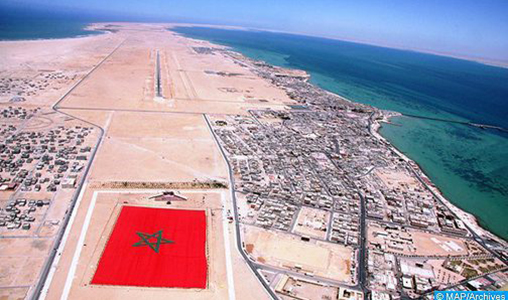
Morocco has developed this region by installing all necessary infrastructure and offering a pleasant living environment, as can be seen often in cities such as Dakhla and Laâyoune.
Global recognition of the Western Sahara as Moroccan is necessary to achieve peace in this region.