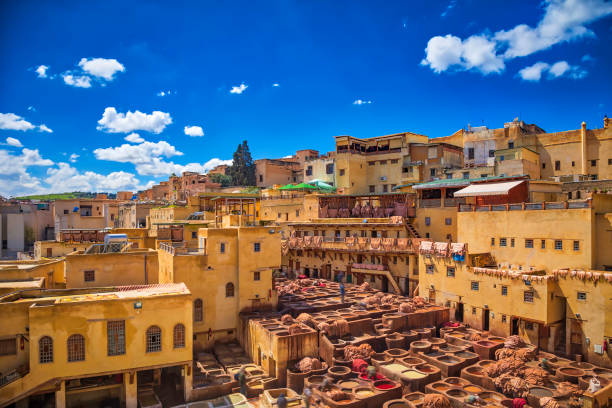
The Medina is a maze of narrow alleys, where every turn reveals a new architectural surprise. The carved wooden gates, the zelliges (ceramic tiles) and the carved plasters are ubiquitous, showcasing the skill of Moroccan craftsmen. The Qarawiyyin Mosque, founded in 857, is a perfect example of this sophisticated architecture. With its majestic minaret and richly decorated interiors, it is a place of prayer and learning.
The fountains of the Medina, such as the Nejjarine Fountain, are other remarkable examples of Moroccan architecture. These delicate structures, often adorned with colorful zelliges and wood carvings, serve as meeting points and refreshing spaces for the inhabitants.
The riads, traditional Moroccan houses with an interior courtyard, are also a distinctive feature of the Medina. These homes are designed to offer privacy and tranquility amid the urban bustle. The central courtyards are often adorned with lush gardens, murmuring fountains and colorful ceramic tiles.
Strolling through the Medina, one also discovers the souks, lively markets where artisans sell their goods. The leather shops, the jewelry stores and the spice stalls are all places where one can admire local craftsmanship. The weaving workshops, with their traditional looms, offer a fascinating insight into the production of rugs and textiles.
The Medina of Fes is a true open-air museum, where every street corner reveals an architectural treasure. Its preservation is essential to understanding and appreciating Morocco’s cultural and historical heritage.