The Majorelle Garden in Marrakech is much more than just a green space. It is an enchanting place where nature, art and history come together to create a true paradise. This article guides you through the secrets of this iconic garden.
The History Behind the Garden
The Majorelle Garden is named after the French painter Jacques Majorelle, who fell under the spell of Marrakech in the 1920s. There he created a residence and a garden, incorporating elements of Moorish architecture, fountains and ponds.
Unique Features
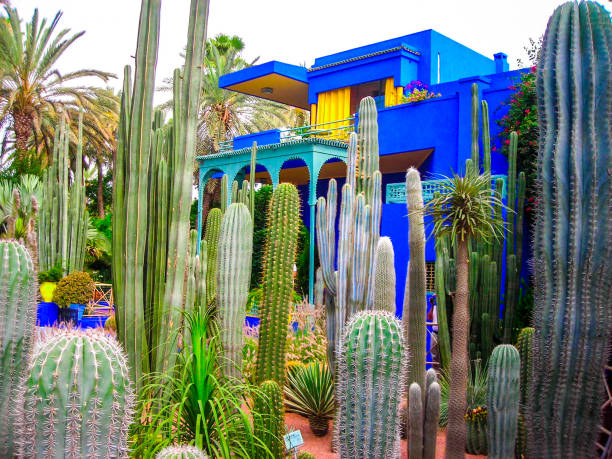
- The Majorelle Blue: The vivid blue, now associated with the garden, is the result of Jacques Majorelle’s passion. He painted the buildings and architectural elements in this distinctive blue, creating a striking contrast with the lush vegetation.
- Exotic Vegetation: The garden houses a diverse collection of exotic plants, cacti and palm trees from around the world. The harmony between the colors of the plants and the bright blue is a visual delight.
- Art and Berber Influence: Beyond its natural beauty, the garden features artistic elements inspired by Berber art and Moroccan culture, such as mosaics, engravings and sculptures.
The Berber House
At the heart of the garden is a recently restored Berber house, housing a museum dedicated to Berber art and culture. The exhibitions offer a captivating insight into the history and traditions of this indigenous people.
The Garden and Yves Saint Laurent
In 1980, the designer Yves Saint Laurent and his partner Pierre Bergé bought the Majorelle Garden to save it from destruction. They carefully restored it and transformed it into an icon of the city.
A Peaceful Refuge
The Majorelle Garden offers a peaceful escape from the bustle of the city. Visitors wander among shaded paths, listening to the gentle murmur of the fountains and soaking up the ambient tranquility.
A Cultural Heritage
The Majorelle Garden embodies a precious cultural heritage for Marrakech. It testifies to the convergence of art, architecture and nature in Moroccan culture.