The Tangia is one of the most iconic dishes of Moroccan cuisine, with its rich flavors and simple ingredients. Originating from the city of Marrakesh, this specialty is a true feast for the senses, offering an authentic and memorable culinary experience.
Origin and History:
Tangia takes its name from the vessel in which it is traditionally cooked, also called a “tangia.” This dish has its roots in the popular cuisine of Marrakesh, where workers once used this practical cooking method to prepare their midday meal during the workweek.
Ingredients and Preparation:
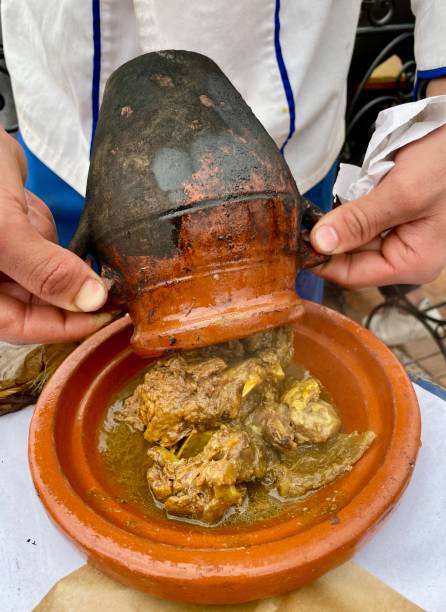
The basic ingredients of tangia are simple: lamb, spices, olive oil, onions, and preserved lemons. These ingredients are carefully seasoned and placed in the clay vessel, which is then sealed with parchment paper and slowly cooked in a traditional earthen oven for several hours.
Flavors and Texture:
Tangia stands out for its rich flavors and tender, melt-in-the-mouth texture. The lamb simmers slowly in its juices, absorbing the aromas of the spices and preserved lemons to create a savory, fragrant dish that quite literally melts in the mouth.
Presentation and Accompaniments:
Tangia is often served in its clay vessel, adding a rustic and authentic touch to the presentation. It is typically accompanied by fresh bread, the Moroccan bread called “khobz”, and a fresh salad to balance the rich flavors of the meat.
A Social and Festive Dish:
Tangia is more than just a dish in the Moroccan cuisine; it is a symbol of conviviality and sharing. Traditionally, it is prepared on Friday morning and taken to the baker to be slowly cooked while families go to the mosque for Friday prayers. Upon their return, they gather around this savory dish to share a festive meal with family and friends.
Tangia is an unmissable Moroccan specialty that delights the taste buds and brings people together around the table. With its rich flavors, tender texture, and fascinating history, it deserves a prime place in your exploration of the Moroccan cuisine.