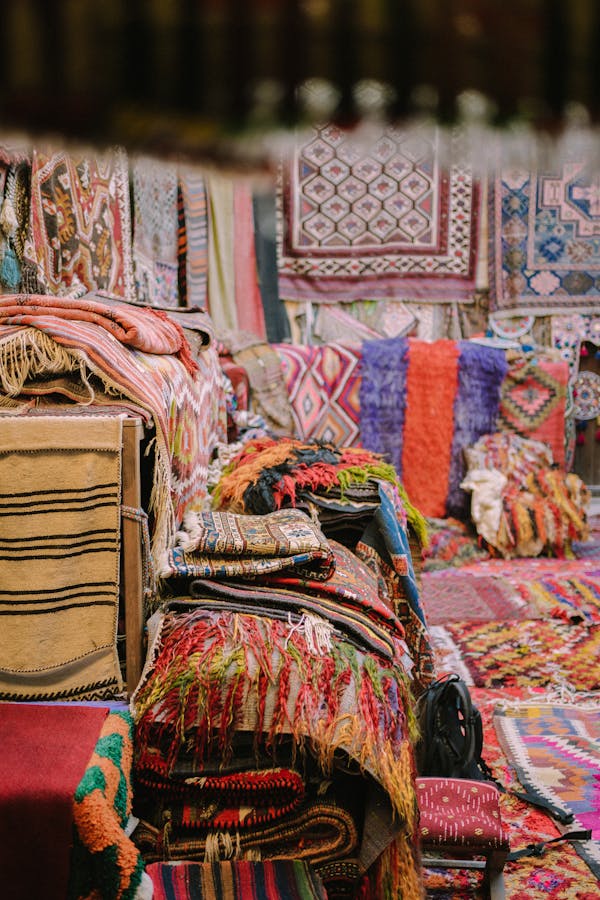
Moroccan craftsmanship is rich and varied, but Moroccan rugs hold a special place in this heritage. Each rug tells a story, handwoven by dedicated artisans. The patterns, colors and materials used are not only aesthetic choices, but elements full of meaning.
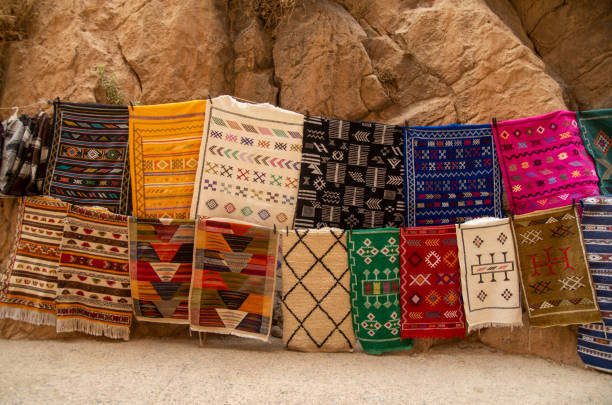
Berber rugs, for example, are famous for their geometric patterns and their vibrant colors. Each region of Morocco has its own styles and weaving techniques. Rugs from the Atlas are renowned for their thickness and abstract patterns, while those from the Middle Atlas are distinguished by their bright colors and symmetrical designs.
The manufacturing process of a Moroccan rug is long and meticulous. Artisans begin by selecting the wool, often from local sheep. This wool is then spun and dyed with natural dyes. The weaving is done on traditional looms, where each knot is carefully tied by hand. It can take months to finish a single rug.
The motifs of Moroccan rugs are not chosen at random. They are often passed down from generation to generation and carry symbols of protection, fertility, and life. Colors also have their importance: red symbolizes strength, blue wisdom, green peace, and yellow eternity.
The market for Moroccan rugs has adapted to contemporary tastes while preserving its ancestral techniques. Many designers today incorporate Moroccan rugs into modern interiors, appreciating their ability to bring warmth and authenticity to a space.
Moroccan rugs are much more than decorative objects. They reflect a rich culture, ancestral know-how and a living tradition.