The Moroccan couscous is much more than a simple dish; it is the symbol of hospitality and sharing in Morocco. This traditional dish is often prepared on special occasions, but also for Friday family meals, where it is served with particular attention to the quality of the ingredients and the way it is presented.
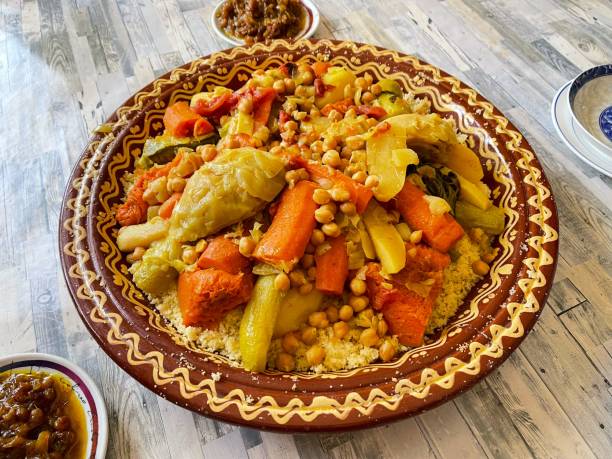
Couscous is mainly composed of durum wheat semolina, steamed in a couscoussier to obtain a light and fluffy texture. The semolina is then moistened with a rich, fragrant broth, in which the meat, often chicken, lamb, or beef, and a variety of vegetables such as carrots, zucchini, and turnips simmer. The vegetables are carefully chosen for their freshness and flavor, and are often cooked with spices like cumin, coriander, and ras el hanout, which give the broth a deep, aromatic taste.
A key element of the Moroccan couscous is the sauce. It is made from fresh tomatoes, onions, and spices. This sauce is poured generously over the semolina and vegetables, thus enhancing the overall flavor of the dish. Some also add chickpeas and raisins for a touch of sweetness that contrasts pleasantly with the savory taste of the meat and vegetables.
The different regions of Morocco each have their own version of couscous. For example, in the north, couscous is often prepared with fish, while in mountainous regions it is more common to use beef or lamb. Milk couscous is another variant, where the semolina is cooked with milk for a creamy, smooth result, often served as a dessert.
Couscous is also a sharing dish. It is traditionally served in a large communal platter, where each diner serves themselves directly with a spoon. This way of eating couscous reflects the spirit of conviviality and community that lies at the heart of the Moroccan culture. Families gather around the couscous dish to share not only the food, but also moments of closeness and conversation.
Today, couscous is recognized as an international dish, appreciated in many countries around the world. However, Moroccan couscous remains unique because of its authenticity and its rich culinary tradition. It is a dish that has managed to survive through the centuries while keeping its essence and character.