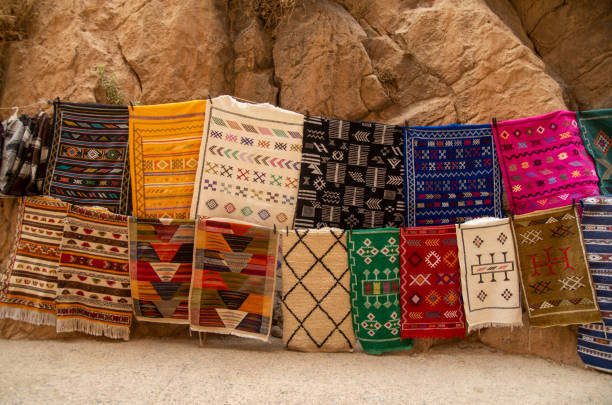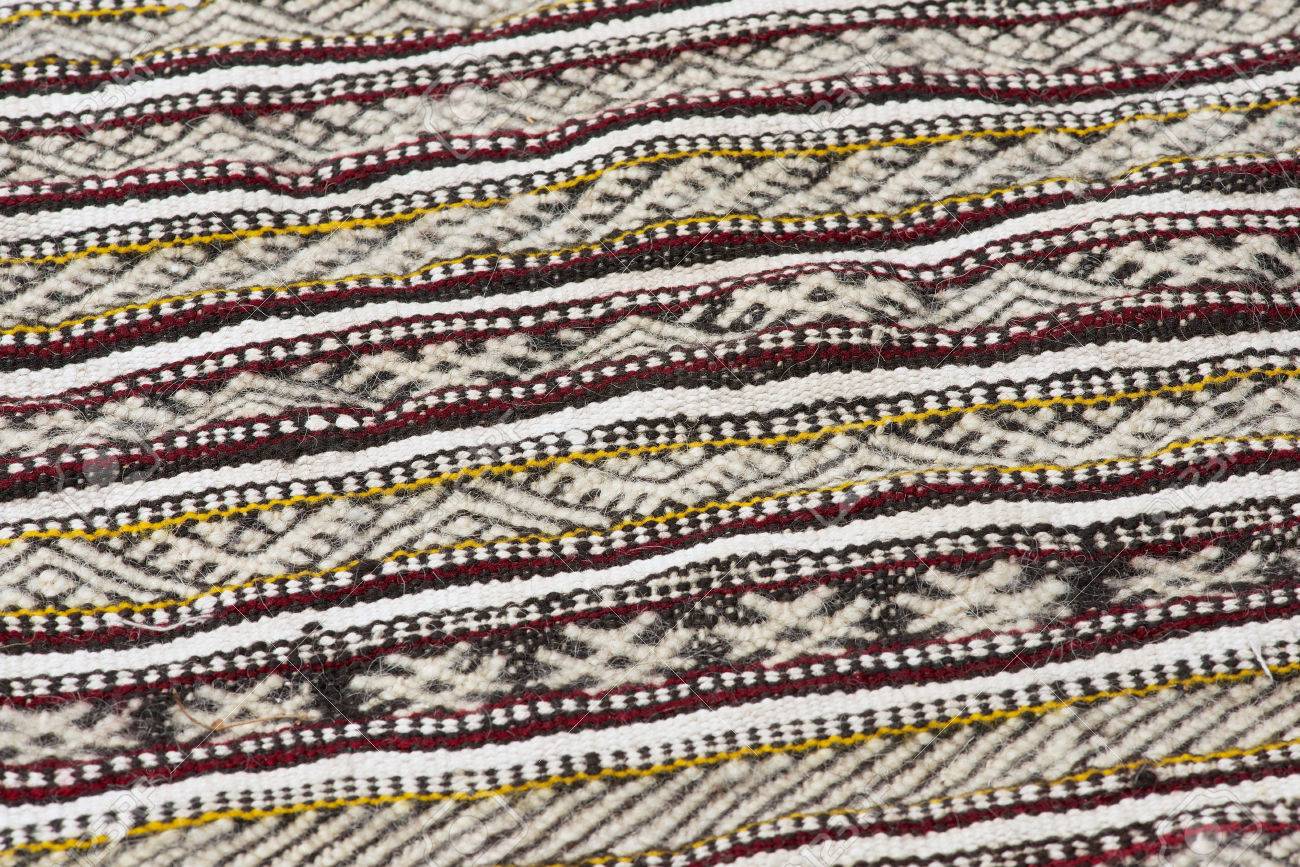
Weaving wool rugs by the Berbers in Morocco is a very ancient tradition. According to sources, it dates back to antiquity. It is found throughout Morocco, in the High and Middle Atlas, in the Atlantic plains as well as in the valleys of southern Morocco. The Moroccan rug contributes to Berber identity.
At that time, Berber women washed the wool in seawater to degrease it. They also used a decoction of soap plants during the beating of the wool.
Once the wool was dried, the real work on the wool could begin. Many tasks would still be carried out to remove impurities from the wool.
Next came the combing, carried out by a female spinning artisan. Then carding and spinning produced the wool, ready for use by the rug weavers.
Beni Ouarain rugs have an origin linked to the traditional agricultural activity of the Berbers. Sheep breeding provides abundant wool.
The diamond motifs, evoking the woman among the Berbers, would have an even more distant origin. They are found in parietal art and the ornaments of pottery dated to the Neolithic.
The tribes of the Beni Ouarain confederation thus perpetuated this ancient art by transposing it to rugs.
These distinctive characteristics place the Beni Ouarain rug in the category of tribal art, so it will be referred to as a tribal rug. The Berbers therefore knew how to preserve their roots, which may seem strange for a people formerly nomadic.
It is further evidence of the Berbers’ settlement, very early in antiquity, in the western part of the Atlas range in Morocco, where isolation ensured their security and preserved their identity.
In the heart of the Moroccan Middle Atlas, discover the origin of the Beni Ouarain Berber rugs.
Source:
http://artisanat-marocain-marrakech.blogspot.com/2016/10/la-fabrication-des-tapis-marocains-en.html