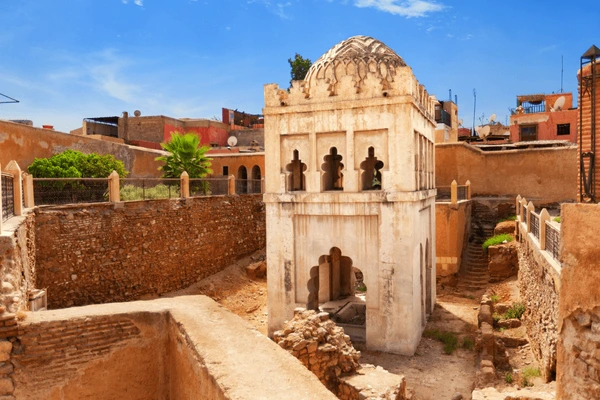
The Morocco has a rich history in terms of military power, particularly during the period of the Almoravids. Founded in the 11th century, this Berber dynasty played a crucial role in the consolidation and expansion of Morocco.
The Almoravids originated from the Sahara desert. Their leader, Yusuf ibn Tashfin, unified the Berber tribes and established the capital at Marrakech in 1070. Under his command, the Almoravids extended their control over a vast region including Morocco, Algeria and even the Iberian Peninsula.
One of the most significant battles of the Almoravids was the battle of Zallaqa in 1086. Also called the battle of Sagrajas, it saw the Almoravid forces confront the king Alfonso VI of Castile. The Almoravids won a decisive victory, consolidating their influence over Al-Andalus and halting the Christian expansion in Spain for a time.
The Almoravids were known for their military discipline and rigorous organization. Their army included light cavalry and mounted archers, who were essential in fighting against the Christians and rebellious tribes in North Africa. They used guerrilla strategies adapted to the desert and mountainous terrain.
Beyond warfare, the Almoravids also reinforced their power through political alliances. They established ties with other Muslim dynasties and used political marriages to secure their rule. For example, Yusuf ibn Tashfin married Zaynab an-Nafzawiyyat, an influential woman, to consolidate his authority.
The fall of the Almoravids began in the early 12th century with the rise of the Almohads. The Almohads, another reformist Berber movement, challenged Almoravid authority. Despite their decline, the military legacy of the Almoravids left a lasting imprint on Morocco and Andalusia.
The Almoravid period represents a time of military power and shrewd strategy for Morocco. Their influence extended well beyond the country’s borders, marking an era of domination and tenacious defense of their territories.