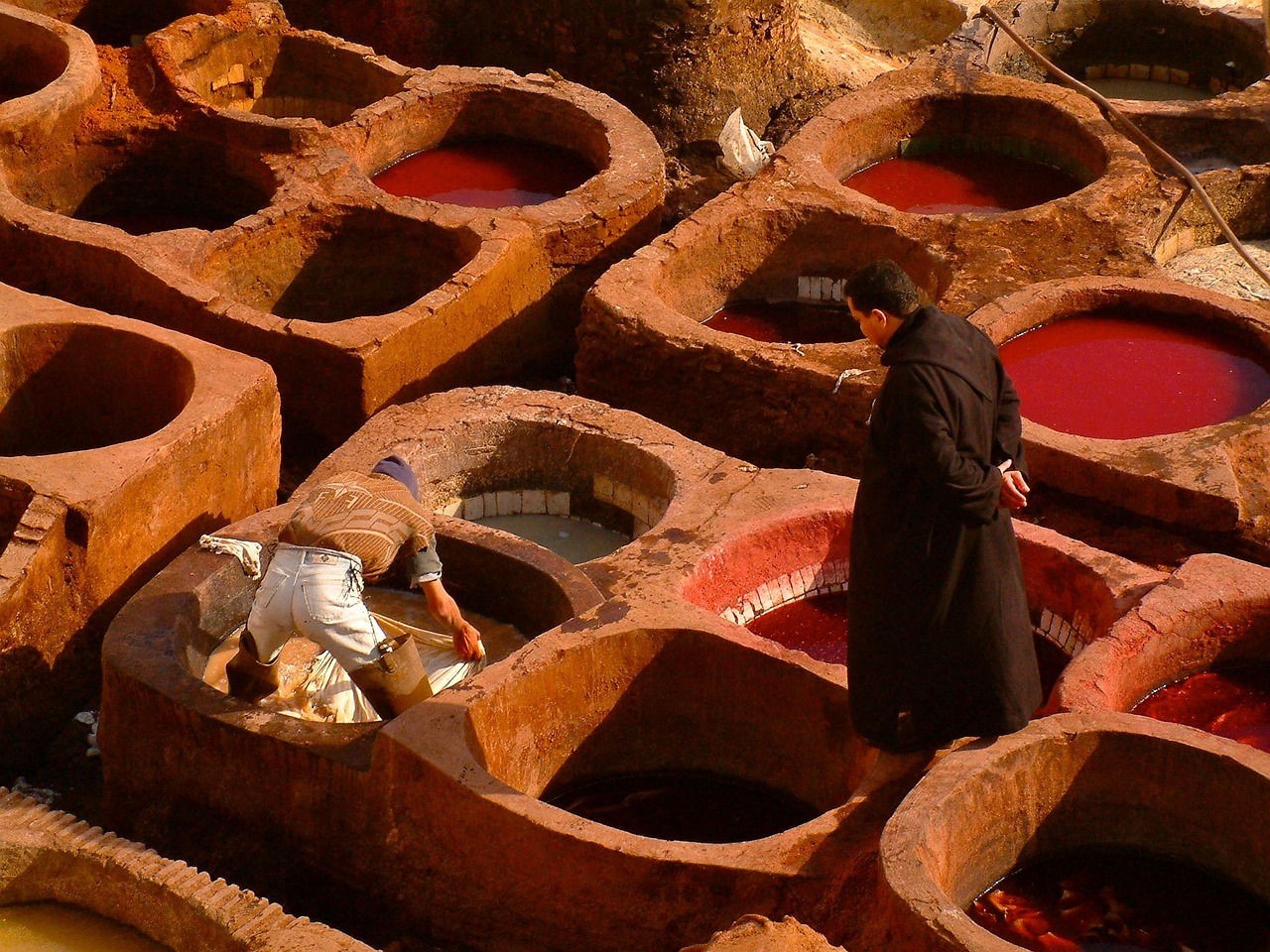
The leather trade is one of the oldest crafts in Morocco. Moroccan leatherworkers are renowned for their skill and creativity, transforming raw hides into beautiful, durable pieces. This craft is particularly present in the cities of Fes and Marrakech, where traditional tanneries are still in operation.
The hides used come mainly from sheep, goats and cattle. Traditional tanneries follow ancestral processes to prepare the leather. The hides are first soaked to remove the hair, then treated with natural substances such as acacia bark and lime. They are then dried in the sun before being dyed.
Leather dyeing often uses natural dyes. Red is obtained from cochineal, yellow from saffron, and blue from indigo. These vivid colors are characteristic of Moroccan leather. Leatherworkers then use this leather to make a variety of products: bags, shoes, belts, and even furniture.
The babouche is an emblematic example of this craft. This traditional, comfortable and elegant shoe is handmade with attention to detail. Babouches can be simple or adorned with complex embroideries, reflecting the style and expertise of the artisan.
Moroccan leather goods do not limit themselves to reproducing old techniques. Artisans constantly innovate, integrating modern designs and contemporary techniques to meet current tastes. Moroccan leather products are now prized worldwide for their quality and their unique aesthetic.
The work of leather in Morocco is a living testament to a rich and diverse artisanal heritage. Each piece tells a story, that of the artisans who, with patience and passion, transform raw materials into works of art.