The kasbahs, those impressive fortresses of southern Morocco, are fascinating testimonies to the region’s history and architecture. Built mainly in rammed earth (pisé), they served both as residences and defensive strongholds for local tribes. These imposing structures offer a unique insight into life and traditions in Morocco’s desert areas.
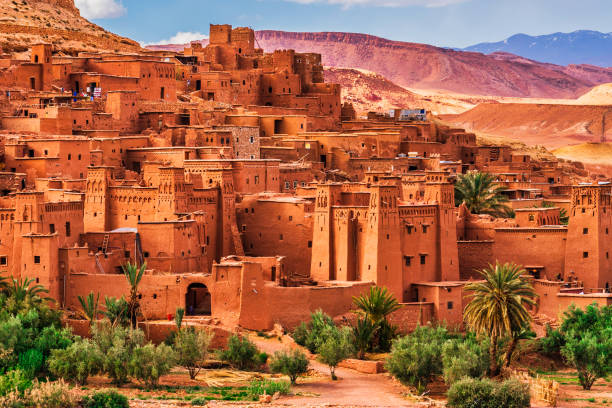
One of the most famous kasbahs is the Kasbah Aït Ben Haddou, listed as a UNESCO World Heritage Site. Located in the Ourika valley, this kasbah is an outstanding example of rammed-earth architecture. Its crenelated towers and robust walls are typical of the region’s fortified constructions. Used as a backdrop for many films, Aït Ben Haddou is a symbol of the cultural and historical richness of southern Morocco.
Kasbahs were often built on hills or strategic sites, offering a panoramic view of the surroundings. This allowed inhabitants to monitor trade routes and defend themselves against attacks. Thick walls and watchtowers were essential features for protection.
The architecture of the kasbahs is also marked by decorative patterns in baked earth and carved wooden doors. The interiors, although often austere, were designed to be functional and resilient to extreme climatic conditions. The courtyards, sometimes embellished with gardens or fountains, offered a pleasant living space despite the harshness of the outside environment.
The narrow windows and the thick walls of the kasbahs helped maintain a comfortable indoor temperature, protecting inhabitants from the desert heat in summer and the cold in winter. The flat roofs were often used to dry fruits or cereals, maximizing the use of available space.
Kasbahs also play an important role in local culture. They are often at the heart of festivities and tribal ceremonies, and serve as gathering places for the community. Their unique architecture and rich history make the kasbahs powerful symbols of identity and resistance for the peoples of southern Morocco.
Today, some kasbahs have been restored and transformed into guesthouses or museums, offering visitors a glimpse of traditional life in southern Morocco. They continue to attract travelers from around the world, fascinated by their raw beauty and captivating history.