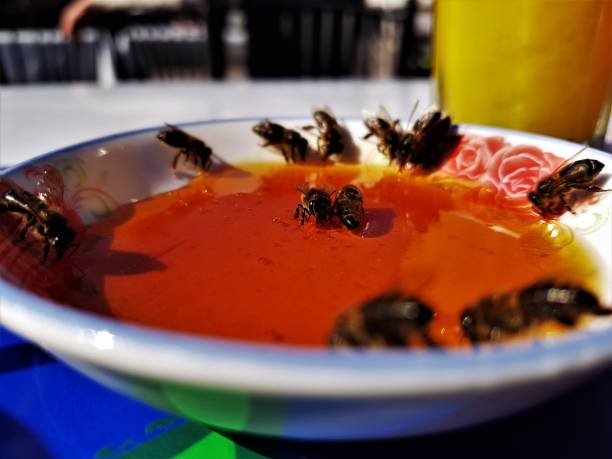
Honey farming is a practice that has existed in Morocco for thousands of years. Indeed, the country is renowned for the quality of its honey and related products, such as beeswax and propolis. However, this activity continues to evolve over the years, notably thanks to efforts to modernize and develop production techniques.
Moroccan beekeepers are today organized into cooperatives and associations, which allows them to better structure their activity and benefit from technical training to improve the quality of their honey. Modern apiaries have replaced the old traditional straw hives, thus offering better protection to the bees and a more abundant honey production.
Morocco also has specific honey production areas, such as the Atlas Mountains, where bees forage on melliferous plants in peace. The different varieties of honey produced in Morocco are as diverse as they are tasty, ranging from eucalyptus honey to thyme honey, as well as orange blossom honey and lavender honey.
However, honey farming in Morocco faces many challenges, notably in terms of international competition and climate change. Moroccan beekeepers must therefore continue to train and adapt to changes in their environment to ensure the sustainability of their activity.
In short, honey farming in Morocco is a millennia-old tradition that continues to modernize to meet current challenges. Moroccan beekeepers work tirelessly to offer quality honey and develop their activity, while preserving the bees and their environment.