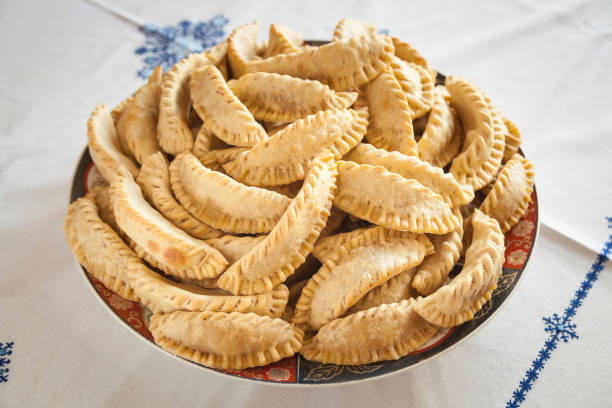
Gazelle horns are without a doubt one of Morocco‘s most emblematic culinary treasures. These small crescent-shaped pastries, deliciously scented with orange blossom and filled with a filling made of almonds, sugar and cinnamon, are a true invitation to a gustatory journey.
Origins:
The history of gazelle horns goes back several centuries in Moroccan history. Their exact origin is subject to debate, but they are generally associated with the Andalusian culinary tradition, introduced to Morocco by waves of migration.
Ingredients:
The recipe for gazelle horns is relatively simple, but it requires great precision and artisanal know-how. The basic ingredients include flour, butter, sugar, almonds, cinnamon and orange blossom water, which gives these delights their characteristic scent.
Preparation:
The dough is prepared by mixing the flour, butter and orange blossom water until a smooth, homogeneous texture is obtained. It is then rolled out thinly and cut into triangles, then filled with the almond filling before being carefully rolled into a crescent shape.
Symbolism:
Gazelle horns are not only delicious pastries, but they also carry deep symbolic meaning in Moroccan culture. Their shape recalls the graceful horns of the eponymous animal, associated with beauty, speed and freedom. They are often served at special celebrations, such as weddings, births and religious festivals, as a symbol of happiness and prosperity.
Popularity:
Over the centuries, gazelle horns have become a true institution in Moroccan pastry, appreciated by both locals and foreign visitors. Their reputation has spread far beyond the borders of Morocco, and they are today considered one of the most emblematic desserts of the Arab world.
Exploring the fascinating history of gazelle horns reveals much more than a simple pastry recipe; it plunges one into the depths of Moroccan culture and tradition. These delicious pastries embody both refined culinary art and the rich cultural heritage of Morocco.