The carob, this emblematic tree of Morocco, hides many treasures beneath its lush foliage. Native to the Mediterranean basin, this hardy tree is closely linked to Moroccan history and culture. Let’s discover together the multiple facets of this fascinating tree.
Origins and distribution of the carob
The carob, scientifically known as Ceratonia siliqua, is native to the Mediterranean region. In Morocco, it is widely found in the Middle and High Atlas regions as well as in some coastal areas. Its adaptation to hot and dry climates makes it an ideal tree for arid regions, where it thrives with minimal care.
Botanical characteristics of the carob
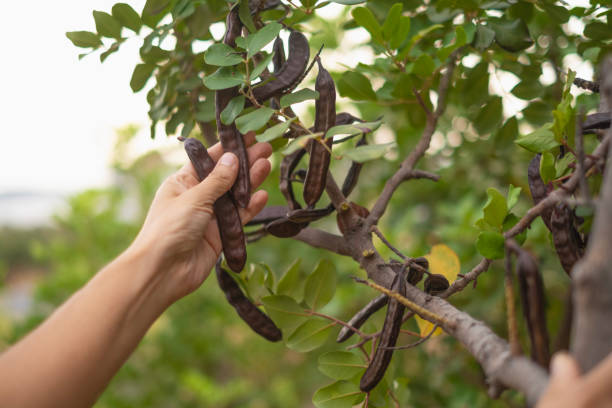
The carob is an evergreen tree that can reach up to 10 meters in height. Its leaves are dark green, leathery and composed of several leaflets. Carob flowers are small, reddish in color, grouped in dense clusters. However, it is its fruit, the carob pod, that attracts the most attention.
The carob pod: a nutritional treasure
Carob pods are rich in essential nutrients. They are a natural source of dietary fiber, vitamins (notably vitamin A and B vitamins), minerals (such as calcium and potassium) and antioxidants. These properties make them a valuable food for health, particularly for regulating digestion and maintaining a strong immune system.
Traditional applications and modern uses of carob
For centuries, carob has been used in Moroccan traditional medicine to treat various ailments, such as digestive disorders and skin conditions. Today, its applications go far beyond traditional medicine. Carob is used in the food industry as a natural thickener and as a substitute for cocoa. Its seeds, also called ‘carob beans’, are used to produce locust bean gum, a food additive widely used in the food industry.
Carob in Moroccan culture
Carob occupies a special place in Moroccan culture and tradition. It is often used in Moroccan cuisine to prepare sweet dishes and refreshing drinks. Furthermore, carob is a symbol of prosperity and sustainability in many regions of Morocco, where it is planted to stabilize soils and protect against erosion.
Carob is much more than a simple tree in Morocco. It is a symbol of natural wealth, tradition and health. Whether in cuisine, medicine or industry, carob continues to enrich the lives of Moroccans and to charm the world with its many benefits.