Moroccan leather is renowned worldwide for its exceptional quality, refined craftsmanship and cultural heritage. This traditional industry plays an important role in Morocco’s economy and attracts visitors from around the world seeking high-quality leather goods and unique souvenirs.
History and Tradition:
The history of leather in Morocco dates back centuries, with tanning techniques passed down from generation to generation. Moroccan craftsmen are renowned for their mastery of traditional tanning methods, which use natural ingredients such as tree bark and plant extracts to produce superior-quality leather.
Leather Trades:
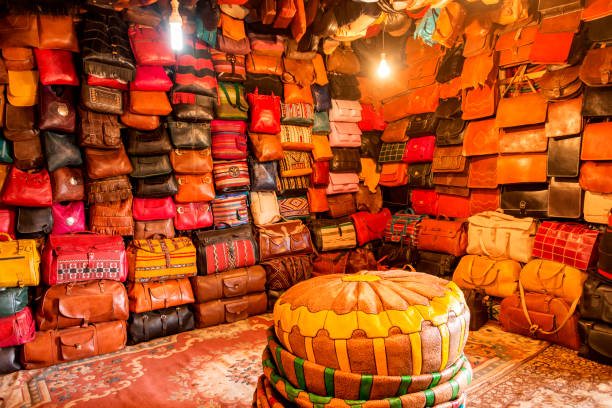
In Morocco, leatherworking is a true art form. The artisans, called “maâlems”, work in traditional souks where they shape and dye the leather by hand to create a variety of products, including handbags, shoes, belts, babouches and decorative items.
Production Centers:
The main leather production cities in Morocco are Fès and Marrakech, which are home to historic tanneries and lively souks where visitors can discover the leather-making process in an authentic way. These production centers are popular destinations for craft enthusiasts and curious visitors looking for unique souvenirs.
Quality and Durability:
Moroccan leather is known for its exceptional quality and durability. Thanks to traditional tanning techniques and the use of natural ingredients, leather produced in Morocco is sturdy, supple and resistant to wear, making it a popular choice for leather goods and furniture.
Trade and Export:
Moroccan leather is exported to many countries around the world, thus contributing to Morocco’s national economy. Moroccan leather products are sought after for their artisanal quality and traditional aesthetic, making them a source of pride for the country and its artisans.
Moroccan leather is much more than a mere material: it is a symbol of traditional craftsmanship, Morocco’s history and culture. Discovering the art of leather in Morocco is a rewarding experience that allows one to appreciate the ancestral know-how and timeless beauty of this unique craft.