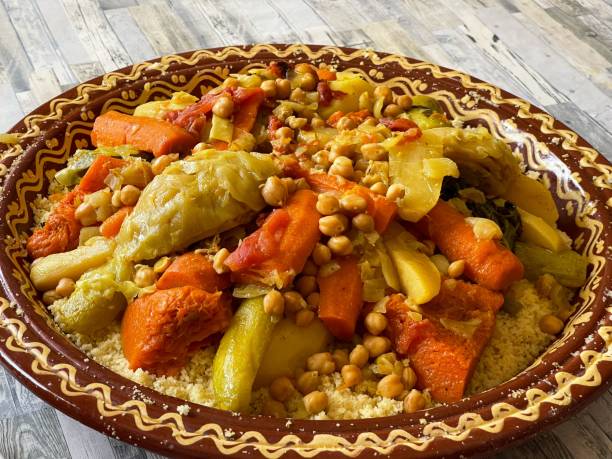
The couscous, this typically Moroccan dish, is much more than a simple meal. It embodies the very essence of Moroccan cuisine, blending flavors, traditions and conviviality. In this article, we will dive into the heart of this emblematic culinary specialty, exploring its history, its preparation and its central role in Moroccan culture.
The Historical Origin of Couscous: Couscous is a dish whose origin dates back centuries. It is closely tied to the Berber culture, the indigenous ethnic group of Morocco. Originally, couscous was prepared by hand, rolling durum wheat semolina with water and leaving it to dry in the sun. Over time, it became a staple food of Moroccan cuisine.
Key Ingredients: Moroccan couscous is mainly made from durum wheat semolina, water, salt and olive oil. Regional variations may include vegetables, spices and meats such as chicken, lamb or beef. Spices, such as cumin, coriander and saffron, give each preparation a distinct flavor.
Traditional Preparation: The preparation of Moroccan couscous is an art in itself. The semolina is moistened with salted water, then steamed in a special pot called a “couscoussier.” During cooking, the semolina is regularly sprinkled with water to make it light and airy. This ancestral method requires patience and precision.
Regional Variations: Each region of Morocco has its own way of preparing couscous. In the north, you will find fish couscous, while in the south, couscous is often served with vegetables and grilled meats. Differences in the use of spices and local ingredients give couscous a diversity of flavors.
Couscous, a Dish for Celebration: In Morocco, couscous is often served on major occasions and at festivals. It symbolizes generosity and Moroccan hospitality. Families gather around a large dish of couscous to celebrate weddings, births and other special moments.
The Art of Eating Couscous: Eating couscous in Morocco is a social experience. It is enjoyed with the hands, rolling small balls of semolina between the fingers and dipping them into the sauce. It is an act of sharing and conviviality, where conversation and laughter are as important as the meal itself.
Couscous Around the World: Couscous has conquered the world thanks to its simplicity and versatility. It can be found today in many restaurants worldwide, adapted to local tastes. It has become a symbol of Mediterranean and North African cuisine.