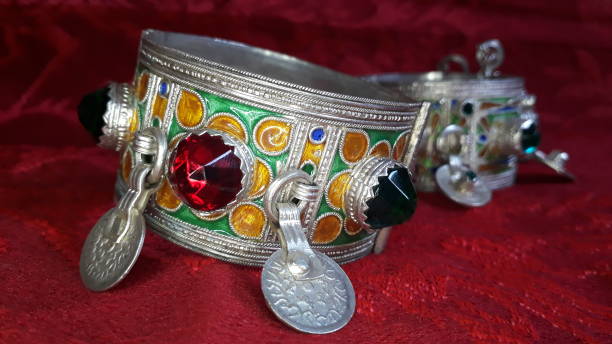
The Berber jewelry are much more than simple accessories; they are the reflection of history and Berber culture. These pieces, often imposing and richly decorated, carry symbols and profound meanings.
The Berbers, or Amazigh, are an indigenous people of North Africa, living mainly in Morocco. Their jewelry craft dates back millennia, using materials such as silver, copper, and semi-precious stones. Techniques used include engraving, filigree and enameling, creating complex and detailed pieces.
Fibulae, for example, are brooches used to hold clothing in place. They are often decorated with geometric patterns and symbols such as the eight-pointed star, representing fertility and protection. Berber necklaces, bracelets and earrings are also rich in symbols. The Hands of Fatima, crosses and animal shapes are commonly used to ward off the evil eye and bring good luck.
Each region of Morocco has its own styles and motifs. Jewelry from the south, for example, is often more colorful and adorned with coral, while those from the Middle Atlas can be simpler and more understated. This diversity reflects the different cultural and historical influences of each region.
The Berber jewelry are not only worn for their beauty. They play an important role in ceremonies and rituals. Berber women often wear their finest jewelry at weddings and religious celebrations, symbolizing their social status and wealth.
Today, Berber jewelry continue to inspire designers around the world. Their unique aesthetic and rich symbolism make them sought-after pieces, valued for both their artistic and cultural worth.
Berber jewelry are a true embodiment of heritage and the Amazigh culture. Each piece is a treasure, carrying within it centuries of history and tradition.