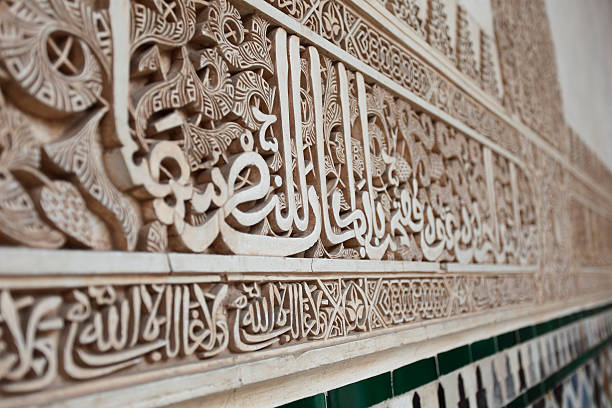
Arabic calligraphy in Morocco, both a cultural heritage and an artistic expression, reveals a world of aesthetics and deep meaning. This artistic treasure has spanned centuries, evolving with cultural and religious influences. This article takes you into the captivating world of Moroccan Arabic calligraphy, revealing its history, its styles, and its current impact.
Historical Heritage
Arabic calligraphy finds its roots in the Quran, the sacred text of Islam. In Morocco, it quickly became a means of expressing faith and culture. Moroccan calligraphers adapted styles such as Diwani, Naskh and Thuluth to create a distinctive aesthetic that evokes spirituality and elegance.
Styles and Forms
Over time, Arabic calligraphy in Morocco has evolved into various styles, each with its own personality. The Diwani style, with its bold curves and exquisite ornaments, evokes grandeur and majesty. The Naskh style, by contrast, is distinguished by its readability and simplicity, ideal for copying the Quran. The Thuluth, with its fluid, elongated lines, is often used for monumental inscriptions.
Art and Spirituality
Moroccan Arabic calligraphy transcends the aesthetic aspect to become a means of connecting believers with the divine. Quranic passages and pious verses are transformed into works of art, establishing a deep link between visual form and spiritual content. Every curve, every stroke, reflects the calligrapher’s devotion.
Contemporary Impact
Although deeply rooted in the past, Moroccan Arabic calligraphy continues to shine in the present. Contemporary artists integrate these classical forms into modern contexts. You will find examples of calligraphy on buildings, decorative objects, and even clothing, thus uniting tradition and innovation.
Learning and Transmission
Moroccan Arabic calligraphy is a demanding craft that requires considerable training and practice. Master calligraphers play an essential role in passing this art on to future generations. Workshops and calligraphy schools offer learning opportunities, thus preserving this living heritage.
Conclusion
Arabic calligraphy in Morocco is much more than a form of art. It is a visual language that speaks to the soul and the intellect. It tells the story, the faith, and the creativity of the Moroccan people across the ages. The art of calligraphy continues to thrive, linking past and present in timeless harmony.