Throughout history, Andalusia witnessed a period of remarkable Arab influence, and Morocco played a central role in this golden era. Dive into the captivating history of the Arab presence in Andalusia and discover how Morocco was at the heart of this period of cultural, artistic, and scientific exchange.
In the 8th century, Muslim Arabs from the Middle East conquered Andalusia, establishing a powerful caliphate that would become the center of a brilliant civilization. Morocco, as a neighboring country, was closely connected to this Arab expansion and played a crucial role in spreading Arab and Islamic culture throughout the region.
Morocco served as a gateway and starting point for exchanges between Andalusia and the rest of the Muslim world. Scholars, artists, scientists, and merchants regularly traveled from Andalusia to Morocco and back, thereby facilitating the transfer of knowledge and ideas.
Moroccan cities such as Fes, Marrakech, and Tangier were flourishing intellectual centers, attracting the brightest minds of the time. Moroccan universities, libraries, and cultural centers housed precious works in philosophy, science, medicine, architecture, and poetry, which greatly influenced Andalusia.
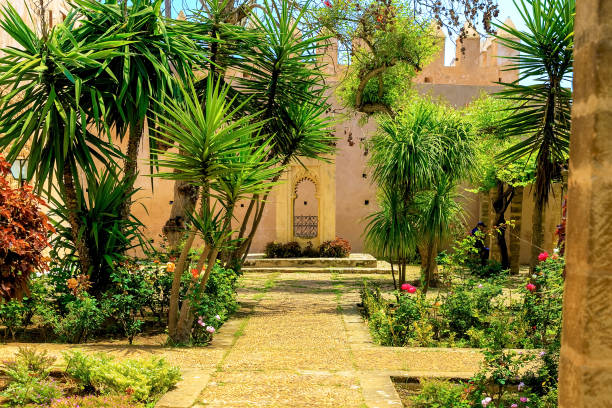
Cultural exchanges between Morocco and Andalusia enriched both regions. Arab-Andalusian architecture, characterized by the famous palaces and gardens of the Alhambra in Granada, was influenced by Moroccan architectural styles. Likewise, music, poetry, and the visual arts were deeply inspired by Moroccan artistic traditions.
This period of history, in which Morocco was closely linked to Andalusia, attests to the importance of Morocco’s contribution to Arab civilization and the Islamic Renaissance. It also recalls the lasting cultural ties that still exist today between Morocco and Spain.