Henna comes from a plant called Lawsonia inermis. It grows in desert regions, and can be found notably in southern Morocco.
These leaves are picked and then naturally dried. Afterwards, the leaves are ground until they form a smooth powder.
To obtain the henna paste that is applied to the skin or hair, this powder is mixed with water.
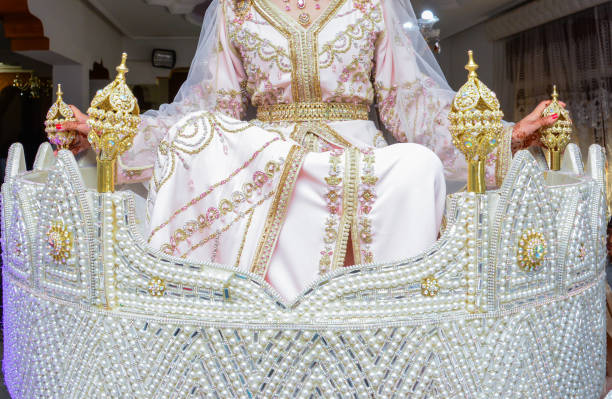
Henna is used for its medicinal virtues and to beautify women. In the Maghreb it is used during ceremonies such as weddings, baptisms, engagements…
The use of henna dates back to antiquity; the Egyptians already used it during ceremonies.
In Morocco, henna is part of the country’s culture and history. It is found in all cities and is part of all ceremonies. It is also used for its virtues.
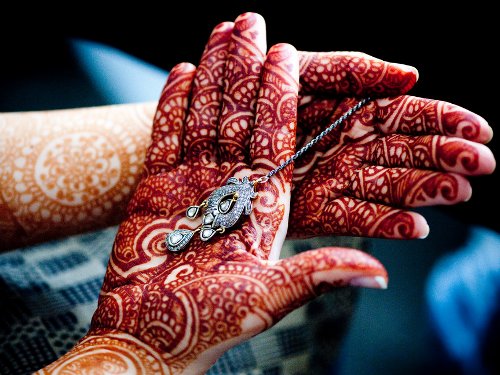
During weddings, henna is used to beautify the bride’s hands and feet. Depending on the region, it is applied in a way that completely adorns the hands and feet as well as the nails uniformly. Or it can appear in the form of a “nakache,” which means ornament. In the West these are called henna tattoos. These tattoos are made by women who in the past used a pointed stick to sketch fine lines; today they use syringes of different gauges.
They are true artists; the creation of ornaments on the skin is done with precision and delicacy. The tattooed designs are complex and breathtaking. Hands and feet are transformed into works of art.
In Morocco, you can find henna tattooists in the souks who can create masterpieces on your skin and make your stay an unforgettable memory.
Henna is part of Moroccan culture and its history; it is present in every Moroccan home.
#henna #morocco #tattoo