Morocco, a country renowned for its rich and fragrant cuisine, finds a unique expression through the use of earthenware in the preparation of its traditional dishes. In this article, let’s dive into the Moroccan gastronomic world and discover why earthenware dishes occupy a central place in this ancestral cuisine.
1. Tagine, the Jewel of Moroccan Cuisine:
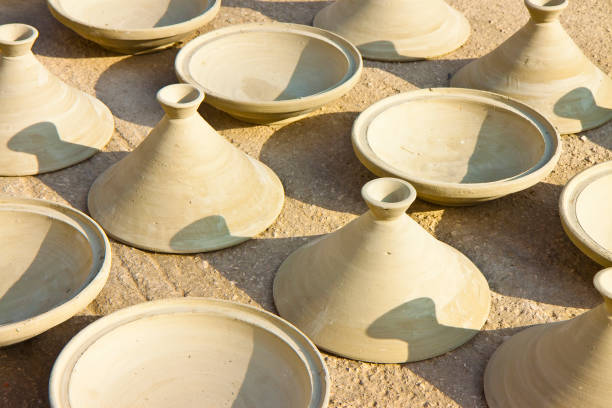
The tagine is the very emblem of Moroccan earthenware dishes. This clay cooking vessel features a conical lid that allows for slow and even cooking of the ingredients. The tagine is used to prepare a variety of dishes, from stews to sweet tajines.
2. Slow Cooking for an Unmatched Flavor:
Slow cooking in earthenware allows ingredients to release their aromas gradually, giving rise to deep and complex flavors. It is this traditional method that gives earthenware dishes their distinctive taste and unparalleled tenderness.
3. Earthenware, an Ideal Heat Conductor:
Earthenware acts as an ideal heat conductor. It retains heat and diffuses it slowly, ensuring uniform cooking. This property helps preserve the texture and nutrients of the food while infusing them with the flavors of the spices.
4. Variety of Earthenware Dishes:
Beyond the tagine, other earthenware dishes deserve to be discovered. M’qualli, lamb terrine, and pastilla are among the delights that benefit from earthenware to elevate their flavors.
5. Cultural Importance:
The use of earthenware dishes in Morocco goes beyond simple culinary function. It carries deep cultural significance, symbolizing tradition and sharing. Meals prepared in earthenware are often an opportunity to gather family and friends around a convivial table.
6. Traditional Craftsmanship:
The making of earthenware dishes in Morocco is a traditional craft. Each piece is often shaped by hand by local artisans, adding a touch of authenticity to these kitchen utensils. The patterns and colors of earthenware often reflect the country’s rich artistic heritage.
7. Tips for Successful Cooking:
For successful cooking in earthenware, it is recommended to “season” them first, that is, to soak them in water before first use. This strengthens their thermal resistance and extends their lifespan. It is also advisable to cook over low heat to preserve the dishes’ flavor qualities.