The Statue of Liberty, an emblematic symbol of freedom and emancipation, hides in its history fascinating and often little-known stories. One of these captivating stories concerns the statue’s designer, Frédéric Auguste Bartholdi, and his discovery of the deep link between the liberty embodied by his work and the Amazigh culture.
At the heart of this story lies the genesis of the very idea of the Statue of Liberty. Bartholdi, a renowned French sculptor, designed this monumental statue as a gift from France to the United States to celebrate Franco-American friendship and the shared ideals of freedom. However, few people know that Bartholdi was deeply inspired by his discovery of the concept of Amazigh freedom.
During his travels in Morocco and Algeria, Bartholdi was fascinated by the culture and history of the Amazighs, an indigenous people of North Africa. He learned that the word “amazigh” itself meant “free man or woman” in the Berber language. This revelation profoundly marked Bartholdi, who saw in the struggle and resilience of the Amazighs an echo of the ideals of freedom he wished to embody in his statue.
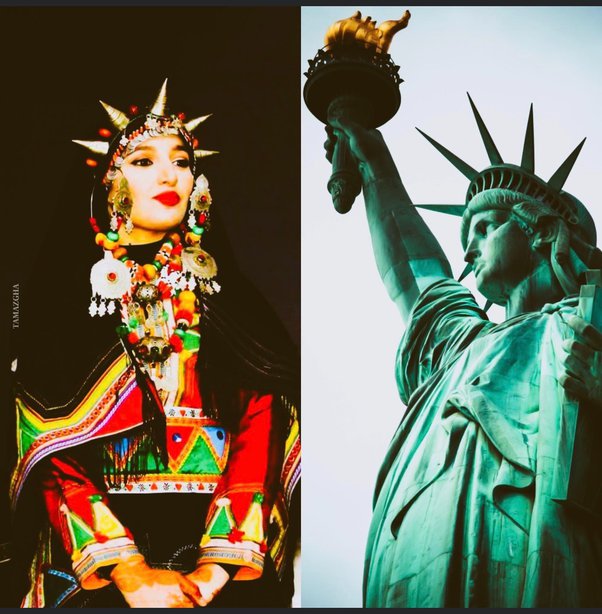
Thus, when Bartholdi began to design the Statue of Liberty, he incorporated elements of Amazigh culture into his design. The crown worn by the statue, often interpreted as a crown of stars representing the seven continents or the rays of the sun, can also be seen as an homage to the traditional headdresses of Amazigh women. This headdress symbolizes freedom and emancipation, values dear to Bartholdi and to the Amazigh people.
The story of the Statue of Liberty’s design is not limited to its physical aspect but also encompasses the ideals it represents. By learning the origin of the word “amazigh” and its profound meaning of “free”, Bartholdi found a new dimension to his project. The Statue of Liberty thus became not only a symbol of political freedom but also a tribute to the struggle for emancipation and human rights around the world.
The story of the Statue of Liberty’s design is intrinsically linked to Bartholdi’s discovery of the concept of Amazigh freedom. This often overlooked connection adds additional depth and richness to the already fascinating history of this global icon of liberty.