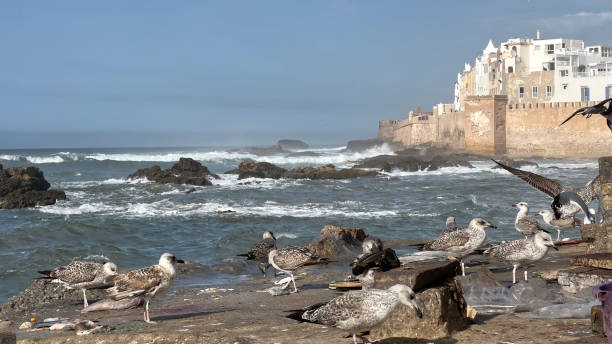
Essaouira, formerly known as Mogador, is a port city located on the Atlantic coast of Morocco. Founded in the 18th century by Sultan Sidi Mohammed ben Abdallah, Essaouira is a city with a rich historical past, marked by Arab, Berber and European influences.
Essaouira’s architecture is unique in Morocco. The medina, listed as a UNESCO World Heritage site, is a remarkable example of an 18th-century fortified town. Its ramparts, bastions and cannons recall the era when Essaouira was an important trading port between Africa, Europe and the Orient. The white houses with blue shutters, the carved wooden doors and the narrow streets give the city an atmosphere that is both Mediterranean and Moroccan.
The port of Essaouira, with its blue boats and its fishermen, is another symbol of the city. It is here that you can taste the best fresh fish, grilled to perfection by local restaurateurs. The port is also the departure point for exploring the Purpurary Islands, a small archipelago off the coast, known for its historical remains and its biodiversity.
The landscapes of Essaouira are varied, between sea and sand dunes. The region’s beaches are ideal for practicing kitesurfing and windsurfing, thanks to the trade winds that blow almost all year round. The argan tree forests, typical of the region, offer a surprising contrast with the ocean. Argan oil, produced from the fruit of these trees, is a local specialty recognized for its cosmetic and culinary virtues.
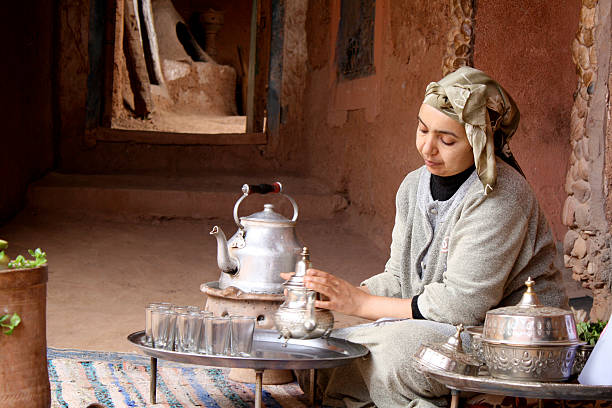
The customs of Essaouira are influenced by its cosmopolitan history. The city is known for its gnawa music, a spiritual musical genre of sub-Saharan origin, which is celebrated every year during the Gnaoua and World Music Festival. The inhabitants of Essaouira are also proud of their artisanal traditions, notably marquetry, the art of thuya wood carving.