The Battle of Tétouan, which took place in 1860, is one of the most significant events in the modern history of Morocco. This confrontation pitted Morocco against Spain, marking the end of a period of relative independence and the beginning of an era of increased foreign pressures on the kingdom.
At the origin of the Battle of Tétouan were growing tensions between Morocco and Spain, exacerbated by border incidents at Ceuta and Melilla, two Spanish enclaves on Moroccan territory. These incidents served as a pretext for Spain to justify a military intervention aimed at asserting its control over these territories and extending its influence in North Africa.
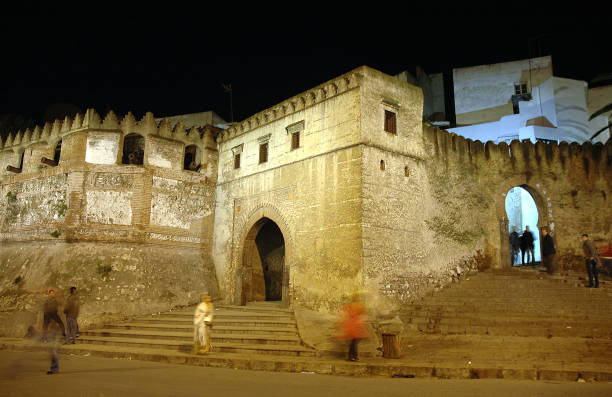
In 1859, after a series of provocations, the Spanish government declared war on Morocco. The Spanish army, led by General Leopoldo O’Donnell, launched an offensive against the city of Tétouan, a strategic center located near the Mediterranean coast. The Battle of Tétouan was marked by the arrival of well-equipped and disciplined Spanish forces, contrasting with a disorganized and poorly armed Moroccan army.
The fighting was fierce, but the technological and logistical superiority of the Spaniards quickly made the difference. The city of Tétouan fell into Spanish hands after several weeks of siege, causing significant losses on the Moroccan side. This humiliating defeat revealed Morocco’s weaknesses in the face of European powers and underscored the urgency of reforms to modernize the country.
The consequences of the Battle of Tétouan were severe for Morocco. Sultan Moulay Mohammed IV had to accept the conditions imposed by Spain, notably the payment of a heavy war indemnity and the recognition of Spanish sovereignty over Ceuta and Melilla. This defeat further weakened the kingdom, making it vulnerable to foreign interventions and colonial pressures.
For Spain, the victory at Tétouan marked a turning point in its colonial policy in North Africa. It strengthened its control over the enclaves of Ceuta and Melilla and allowed it to negotiate economic and political advantages with Morocco, thus consolidating its influence in the region.
The Battle of Tétouan is a crucial event in Morocco’s history, symbolizing the end of its autonomy in the face of European colonial ambitions and highlighting the need to modernize the country to withstand foreign pressures.