Ramadan has begun in Morocco. It is a sacred period when the population will fast for 29 or 30 consecutive days according to the lunar calendar. During this period, it is forbidden to eat, drink or have sexual relations between dawn and sunset.
In the evening, when the sun sets, the fast is broken, which in Arabic is called “iftar”. It is an important moment in Morocco where families gather to share a rich and friendly meal.
Ramadan is the fourth pillar of Islam among the five that compose it. It allows one to feel hunger in order to remain humble and to give alms to the less fortunate. The work on one’s spirituality and one’s faith is very important and very present during Ramadan (more than the rest of the year).
During the month of Ramadan, Moroccans strive to work on their spiritualities. They commit to reading the entire Quran, they multiply alms in the form of financial donations, culinary gifts, by offering dishes. Moroccans exchange dishes with neighbors for the breaking of the fast.
Also, mosques organize spiritual gatherings where religion and its benefits are discussed. But the most striking are the tarawih prayers that take place in the evening. These are long prayers organized in groups where all Moroccans attend the mosques. Many mosques have to spread outside because the number of people is too large.
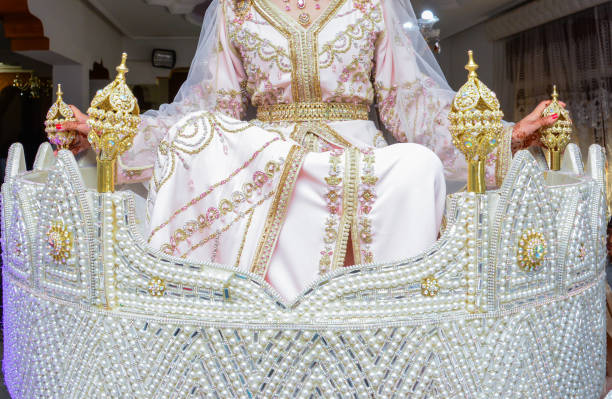
The month of Ramadan is also a time when Moroccans rejoice in being able to participate in festivities; the souks and shops stay open late, women and children make traditional outfits that they wear and above all it is a period when Morocco’s culinary richness is displayed on the tables.
What can be found on Moroccan tables at iftar?
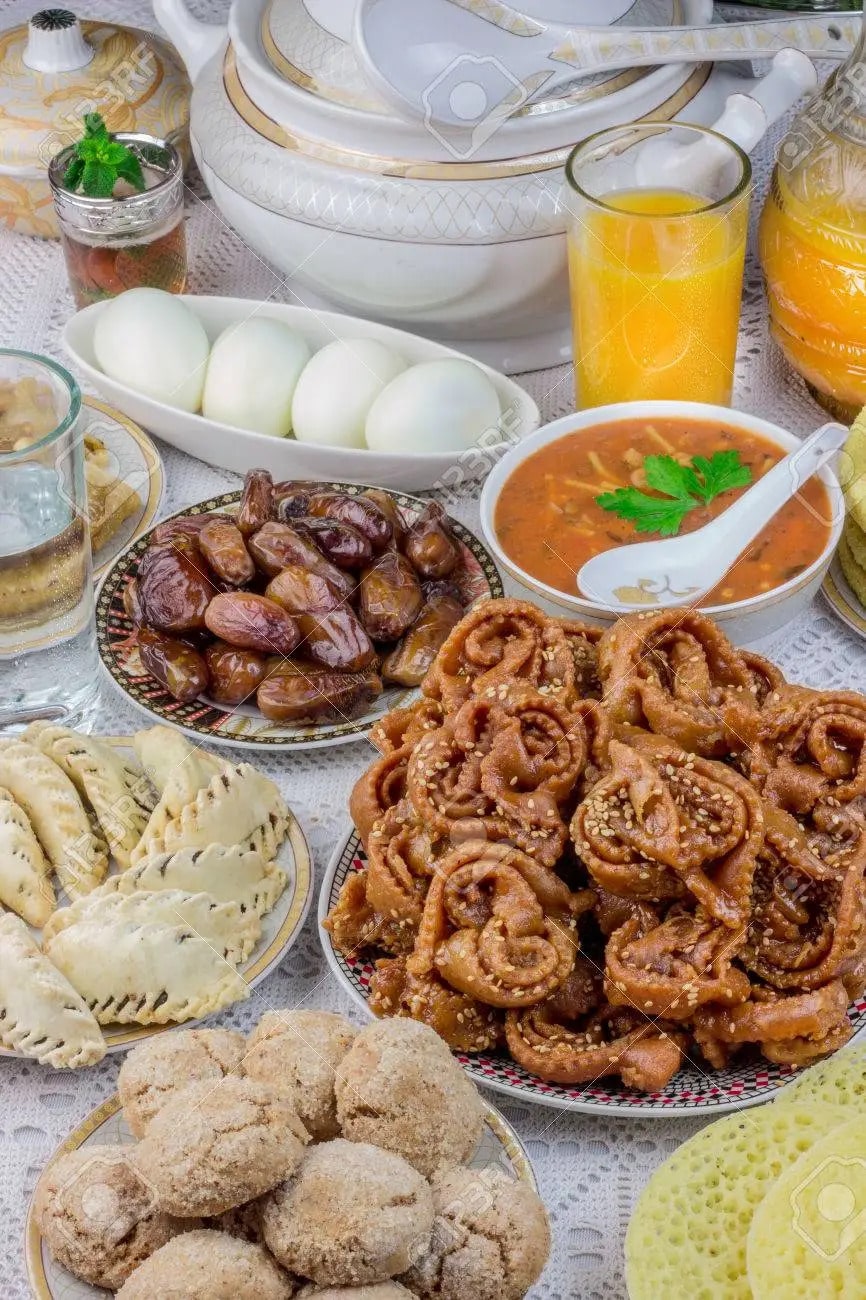
First of all, as the prophetic tradition dictates, the breaking of the fast is done with dates. A sweet and rich fruit that is often eaten in an odd number. It is accompanied by water or milk.
Next comes the moment to savor the harira, the traditional Moroccan soup made from vegetables. Moroccans like to accompany it with sweet pastries. The essential is the chebakia; this pastry is present on all Moroccan tables. It is made from flour, orange blossom water, almonds, anise, sesame seeds, gum arabic, honey… Moroccans adore this sweet pastry. Consume in moderation for people with diabetes. Other pastries can also be appreciated on the tables, such as almond-stuffed bricks coated in honey, makrouts. Moroccans also like to eat dried figs. Depending on the region where you are in Morocco, the table may vary.
Main courses come later. During this month Moroccans favor recipes like the famous pastilla, which are thin sheets filled with a preparation based on chicken, eggs and almonds, or a preparation of seafood or meat. These flaky bricks delight the taste buds of gourmands. Moroccan tagines are staples. Moroccans prepare all kinds of recipes: briouats (filled bricks), batbouts (filled small breads)…
Moroccans like to finish with a glass of coffee or the famous mint tea.
These hot drinks are accompanied by baghrir, which are pancakes with a thousand holes that are spread with olive oil, jam, honey, butter and chocolate spread.
The harcha, those famous semolina flatbreads cooked in a pan, are simple and quick to make especially in the mini version. Harcha is served hot with honey, cheese or jam.
Msemen or Msemmen are flaky pancakes known throughout the Maghreb. Recipes always differ a bit depending on the regions of the Maghreb but the results are always delicious. Msemen can be sweet or savory according to your wishes. You can also stuff them to make an original recipe
The month of Ramadan is a sacred month for Moroccans but it is also a month of joy and an opportunity to come together to share.