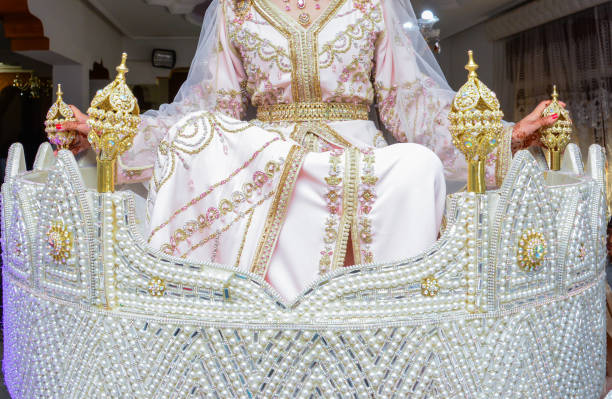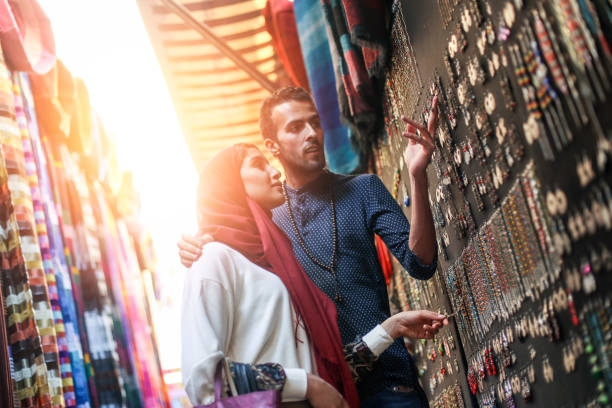
In Morocco, jewelry holds great importance in culture, particularly for women. Moroccan jewelry is often colorful and adorned with gemstones and intricate patterns, and it is worn during celebrations, weddings and other special occasions.
Jewelry has symbolic meaning in Moroccan culture, and it is often considered a symbol of status and wealth. Moroccan women often wear jewelry to show their social position and their affiliation to a tribe or to a family.
Moroccan jewelry can also have religious significance. For example, Muslim women often wear jewelry like the hijab or the khimar to cover their head and neck, while jewelry such as bracelets and earrings can be worn for aesthetic reasons or to celebrate religious events like Eid al-Fitr.
Jewelry can also be used to protect against the evil eye or misfortune. Moroccan women often wear amulets and talismans to protect themselves from negative energies and to attract good fortune.
Finally, Moroccan jewelry is considered a form of art and craftsmanship. Moroccan jewelers have a long tradition of creating jewelry adorned with traditional patterns, gemstones and pearls. These pieces are often considered works of art and can be passed down from generation to generation.
In conclusion, jewelry is very important for Moroccan women in their culture. They are worn for aesthetic, religious, symbolic and practical reasons, and are considered a form of artistic and cultural expression.