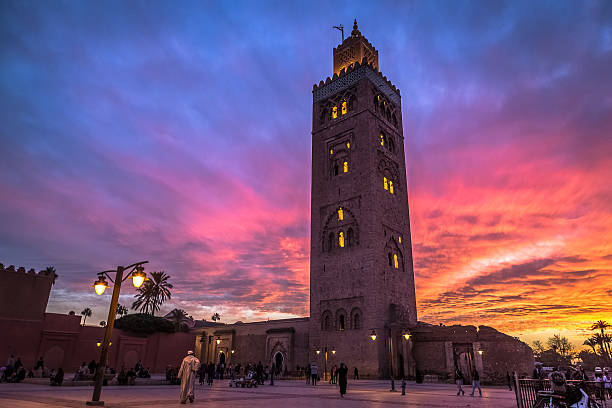
The Koutoubia Mosque is one of Marrakech’s most iconic treasures, a city rich in history and culture. In this captivating article, we will delve into the fascinating history of this legendary mosque, exploring its magnificent architecture, its religious significance, and its impact on Moroccan heritage. Discover the secrets and stories that surround this sacred place, and let yourself be carried through the centuries by a unique spiritual and artistic tradition.
The majestic architecture of the Koutoubia Mosque: The Koutoubia Mosque is renowned for its grand architecture, with its emblematic minaret rising to over 70 meters high. Its intricate details, pointed arches, geometric patterns, and decorated ceramics bear witness to the influence of Hispano-Moorish art. Discover the distinctive architectural features that make it a breathtaking masterpiece.
Religious and cultural significance: The Koutoubia Mosque is a sacred place of worship for Morocco’s Muslim faithful. Its history dates back to the 12th century, and it is regarded as a symbol of Islam in Morocco. Worshippers gather for daily prayers and religious celebrations, while visitors are invited to admire its architectural beauty and to soak in the spirituality that emanates from this sacred site.
Impact on Moroccan heritage: The Koutoubia Mosque plays an essential role in Moroccan cultural heritage. It is a living testament to the country’s turbulent history, having survived several dynasties and historical events. It has also influenced the architecture of subsequent mosques in Morocco and other regions of the world. Explore how this emblematic mosque has shaped Morocco’s cultural identity and continues to captivate visitors from around the globe.