Goulimine, a town located in southern Morocco, is famous for its traditional crafts, particularly the production of southern Moroccan rugs. These unique rugs, handwoven by talented artisans, embody the very essence of the southern Berber culture. In this article, dive into the fascinating history of Goulimine and explore the secrets of the ancestral art of rug weaving, symbols of Moroccan identity.
The history of Goulimine and the art of rug weaving
Goulimine, nicknamed “the gateway to the desert,” is a historic crossroads of trade routes linking Morocco to sub-Saharan Africa. This strategic position contributed to the flourishing of local crafts, especially rug weaving. The Berber women of the region have perpetuated this ancestral art from generation to generation, passing their skills and know-how from mother to daughter.
Characteristics of southern Moroccan rugs
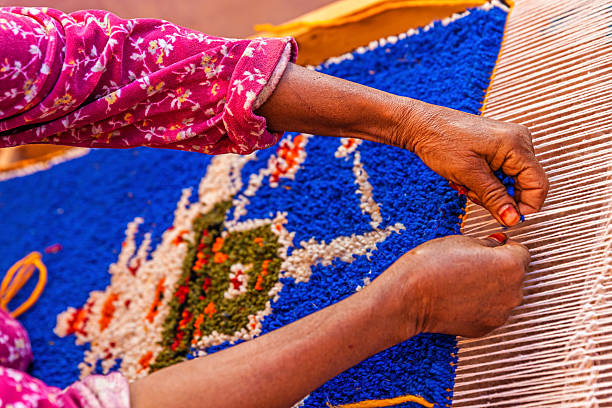
Goulimine rugs stand out for their complex geometric patterns, vivid colors, and high-quality materials. Made from wool sourced from local sheep herds, these rugs are woven by hand on traditional looms. Each rug is a unique piece, reflecting the artisan’s personal style and the history of their tribe.
Symbols and meanings of Berber rugs
The patterns and symbols found on Berber rugs carry deep cultural significance. Geometric designs can represent elements of nature such as the sun, stars, or oases, while other motifs symbolize fertility, protection, or spiritual beliefs. Each rug tells a story, offering insight into the life and culture of the Berber tribes of southern Morocco.
The rug-making process
Making a Berber rug is a laborious process that requires time, patience, and precision. Artisans begin by spinning the wool by hand to obtain threads of varying thicknesses and colors. Then they prepare the loom and start to weave the threads following traditional patterns. This process can take weeks or even months, depending on the size and complexity of the rug.
Preserving the craft of rug making
Despite social and economic changes, Goulimine’s artisans strive to preserve this traditional craft. Local associations and cooperatives have been created to support artisans and promote their work, ensuring that this tradition continues to thrive.
Conclusion
The southern Moroccan rugs of Goulimine are much more than decorative objects; they reflect Berber identity and culture. The weaving of these rugs represents an ancestral art passed down through generations, recalling Morocco’s rich and diverse history. By visiting Goulimine, you will have the opportunity to discover the soul of southern Morocco through these magnificent rugs.