Fes, the famous imperial city of Morocco, is home to one of the most fascinating and authentic attractions: the tanneries. These emblematic places are the heart of the leather industry in Fes and offer a unique insight into the traditional manufacturing process. This article invites you to explore the tanneries of Fes, their secrets, and their role in the city’s heritage.
The Tanning Process
The tanneries of Fes are centers where raw hides are transformed into finished leather. The tanning process involves several stages, including cleaning, soaking, and treatment with natural substances.
Ancient Craftsmanship
The tanneries of Fes preserve an age-old craft that goes back centuries. Traditional techniques are passed down from generation to generation.
The Tanneries District
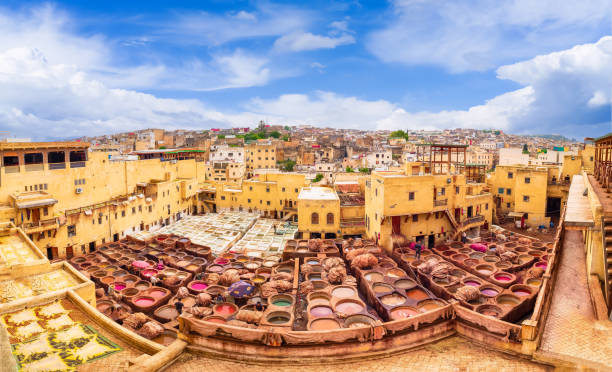
The tanneries district, known as the Médina de Fès el-Bali, is home to these treasures. The roofs of the surrounding houses offer a spectacular panoramic view of the tanneries.
The Palette of Colors
A striking feature of the tanneries of Fes is the vibrant palette of colors. The leathers are dyed using natural pigments, creating a unique visual spectacle.
The Terracotta Vats
The hides are soaked in large terracotta vats filled with natural dyes. Each vat is associated with a specific color.
The Sensory Experience
Visiting the tanneries of Fes is an intense sensory experience. The smells and colors transport visitors to another time.
Fes Leather Around the World
The leather produced in the tanneries of Fes is highly prized. It is used to create a variety of products, such as shoes, bags, and garments.
Preservation of Heritage
The tanneries of Fes play a crucial role in the preservation of Moroccan heritage. They are a living testimony to the city’s history and culture.
Support for the Local Economy
The leather industry in Fes provides employment to many local artisans. It also contributes to the city’s economy.
Conclusion: A Dive into History
The tanneries of Fes are much more than places of leather production. They are witnesses to the past and guardians of cultural authenticity.