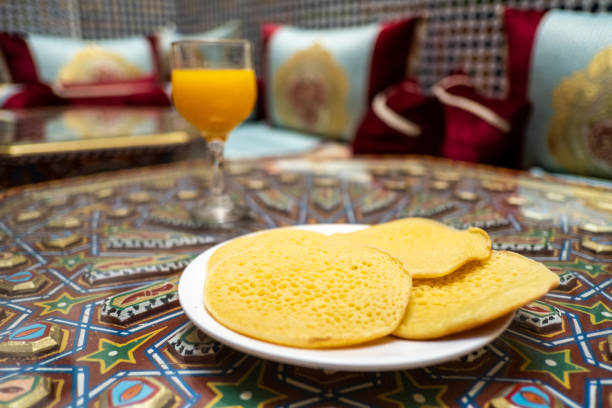
The mille trous crepe, also known as “baghrir“, is a wonderful creation of Moroccan cuisine. This light, airy crepe dotted with small holes is a true symphony of flavors. In this article, we will dive into the world of the mille trous crepe, exploring its origin, its preparation, and the way it fits into Moroccan culture.
The History of the Mille Trous Crepe
The origin of the mille trous crepe dates back centuries in the regions of North Africa. This delicacy was originally prepared for special occasions and religious festivals. It was a symbol of sharing and hospitality within Moroccan families.
Key Ingredients
The preparation of the mille trous crepe requires simple ingredients commonly found in Moroccan kitchens. The main ingredients are “fine semolina”, “flour”, “yeast”, “warm water”, and “salt”. These elements are mixed to create a light, fluid batter that will be used to cook the crepes.
Step-by-Step Preparation
- In a large bowl, mix the fine semolina, the flour, the yeast, and a pinch of salt.
- Pour warm water into the dry mixture while stirring until you obtain a smooth batter.
- Let the batter rest for about an hour to allow the yeast to do its work.
- Heat a non-stick pan over medium-low heat and pour in a small ladle of batter.
- Watch in wonder as small holes form on the surface of the crepe.
- Once cooked on one side, the crepe is ready to be enjoyed.
Accompaniments and Variations
The mille trous crepe can be served in different ways. It is often drizzled with honey for a touch of sweetness, or dusted with powdered sugar. It is also enjoyed with melted butter, jam, or fresh cheese. Variations sometimes include adding orange blossom water to the batter for a unique floral flavor.
The Mille Trous Crepe in Moroccan Culture
The mille trous crepe is more than a simple treat in Morocco. It is an integral part of the country’s culinary culture. It is found on family tables during breakfasts, afternoon snacks, and special celebrations. It symbolizes the sense of conviviality and generosity that characterizes Moroccan culture.