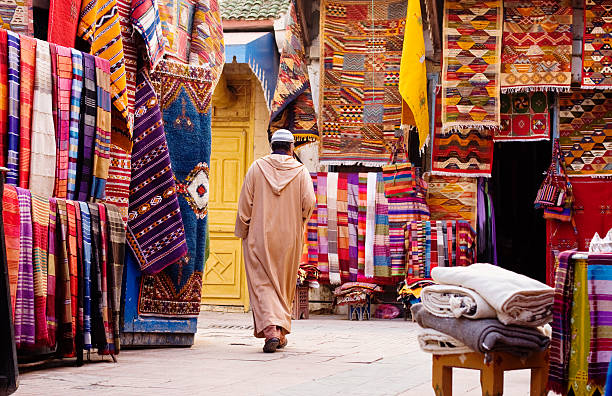
Moroccan souks are emblematic markets, imbued with a lively atmosphere and a rich history. To understand their origin, it is essential to explore the multiple facets that contributed to the birth of these traditional markets in Morocco.
1. Historical context :
Souks have their roots in Morocco’s ancient history. They date back centuries, emerging in a context where trade was at the heart of economic activity. Trade caravans crossed the country, exchanging goods and thus creating gathering points.
2. Cultural crossroads :
Souks evolved as cultural crossroads, where different communities met to trade and share their traditions. This contributed to the diversity of available products, creating a vibrant atmosphere in these markets.
3. Spatial organization :
The spatial organization of the souks is a fascinating aspect of their origin. Narrow alleys and clustered stalls were designed to maximize space and facilitate visitors’ navigation. Every corner of these markets was strategically planned to accommodate a variety of products.
4. Local craftsmanship :
The souks have always been the cradle of local craftsmanship. Artisans, specialized in creating unique products, found in these markets an ideal place to display and sell their creations. Thus, the souks became showcases of Moroccan artisanal talent.
5. Religious significance :
Some souks, located near places of worship, acquired religious significance. Worshippers, after their prayers, often went to these markets to make purchases, creating a symbiosis between spiritual and commercial aspects.
6. Intergenerational transmission :
The tradition of the souks has been passed down from generation to generation. Knowledge about products, sales techniques and artisanal skills has been preserved, ensuring the continuity of these markets over time.
7. Festive events :
The souks were also the setting for festive events. From trade fairs to cultural celebrations, these markets were places of excitement where social and economic life mixed harmoniously.