The babouche is much more than a simple shoe in Morocco: it is a symbol of tradition, craftsmanship and culture. This emblematic footwear, worn for centuries, continues to captivate with its timeless elegance and artisanal know-how.
History and Origins :
The origins of the babouche date back to Antiquity, where it was worn by the inhabitants of the Middle East and North Africa. Over time, it became an essential element of the Moroccan wardrobe, reflecting the country’s history and cultural influences.
Characteristics of the Babouche :
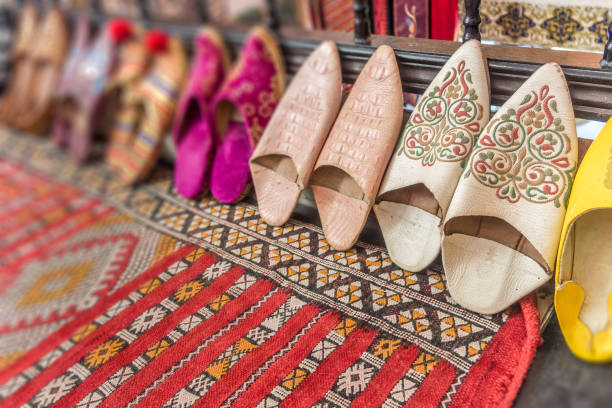
The babouche is both a simple and elegant shoe, characterized by its flat sole and pointed shape. Traditionally made of soft leather, it is often adorned with embroidered patterns, colorful pom-poms or beads, adding a touch of elegance and sophistication to its design.
Artisanal Manufacture :
The making of babouches is a traditional craft in Morocco, passed down from generation to generation. The artisans, called “maâlems“, use age-old techniques to cut, sew and decorate each pair of babouches by hand, making them unique and precious pieces.
Varieties of Babouches :
There are several types of babouches in Morocco, each with its own characteristics and uses. The “babouche belgha” is the most common, worn daily, while the “babouche balgha” is more elaborate and decorated with embroidery for special occasions. There are also babouches for men, women and children, suited to every style and preference.
Wearing and Symbolism :
In Morocco, the babouche is much more than a simple shoe: it is charged with symbolism and tradition. Worn in homes and on the streets, it embodies hospitality, comfort and the authenticity of Moroccan culture. It is also associated with festive and religious events, where it is often given as a gift or worn during celebrations.
Popularity and Influence :
The babouche remains popular not only in Morocco but also worldwide. Its elegant design and comfort make it a sought-after choice for those looking for a shoe that is both practical and stylish. Moreover, it has inspired many fashion designers who incorporate elements of babouches into their contemporary collections.
The babouche is much more than a fashion accessory: it is a symbol of traditional craftsmanship and Moroccan culture. Discovering the history and characteristics of the babouche allows one to fully appreciate its timeless elegance and its lasting influence on fashion and design.