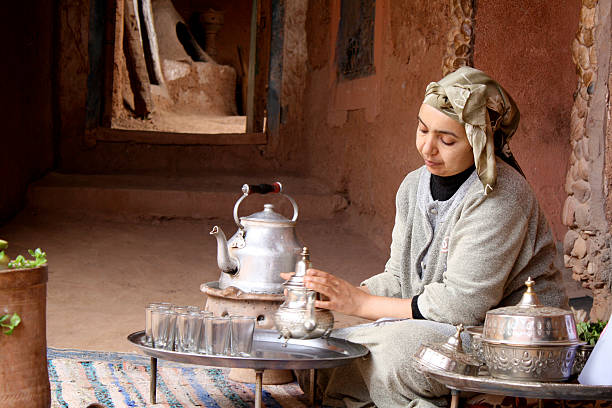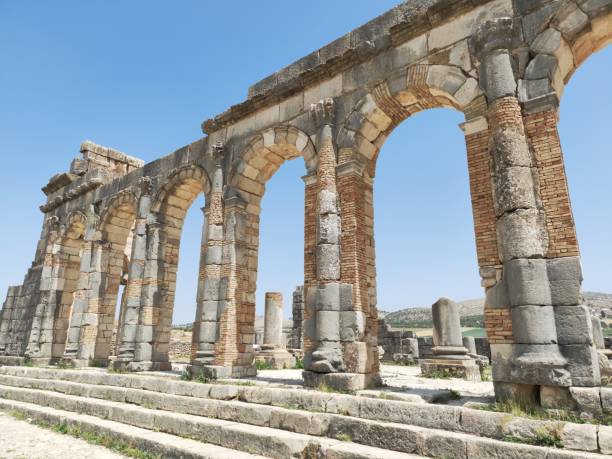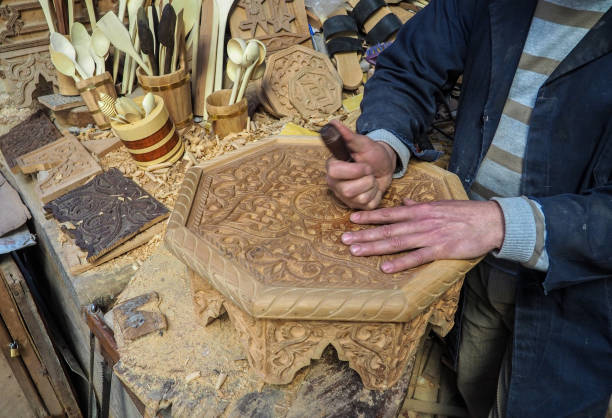
Moroccan craftsmanship is a window onto Morocco’s rich cultural history. This article explores the diversity and significance of Moroccan craftsmanship, from hand-woven rugs to finely decorated ceramics, and how these traditions continue in the modern world.
The Berber rugs, known for their intricate patterns and vibrant coloring, are one of the most emblematic examples of Moroccan craftsmanship. Each pattern and color has a meaning, often linked to the life and beliefs of the Berber tribes.
The pottery and ceramics of Fès and Safi are also famous for their beauty and artisanal technique, which dates back several centuries. These pieces are renowned for their geometric patterns and bright colors, often in blue and green, which reflect Islamic and Mediterranean influences.
Leather craftsmanship, particularly that of babouches and bags, is another facet of Moroccan craftsmanship. The tanneries of Fès, in particular, are a World Heritage site where traditional methods of leather processing have been practiced almost unchanged for centuries.
This artisanal heritage is not only a pillar of Moroccan cultural identity, but also an important source of income for many communities. Promoting traditional practices in a globalized market represents a challenge, but also an opportunity for tourism and the local economy.
For those fascinated by the richness of the craftsmanship and its role in Moroccan culture, our article offers an in-depth look at these ancestral practices and their adaptation to the 21st century.