Moroccan ceramics is an ancestral art, rich in meaning and know-how. Moroccan potters perpetuate techniques that have been passed down from generation to generation, making each piece a unique work.
Morocco is renowned for its zelliges, glazed terracotta mosaics, often used to decorate the walls and fountains. These complex geometric patterns require great precision and a keen artistic sense. Each piece of ceramic is cut and assembled by hand, a process that can take days or even weeks.
Ceramic workshops are mainly located in Fès, Safi and Meknès. Each of these cities has its own particularities. For example, Safi pottery is often blue, while that of Fès is known for its complex floral patterns.
The production of ceramics begins with the extraction of clay, a raw material abundant in Morocco. The clay is then shaped, dried, and fired in traditional kilns. Artisans then apply a glaze before firing the piece a second time. This double firing process gives Moroccan ceramics their sheen and durability.
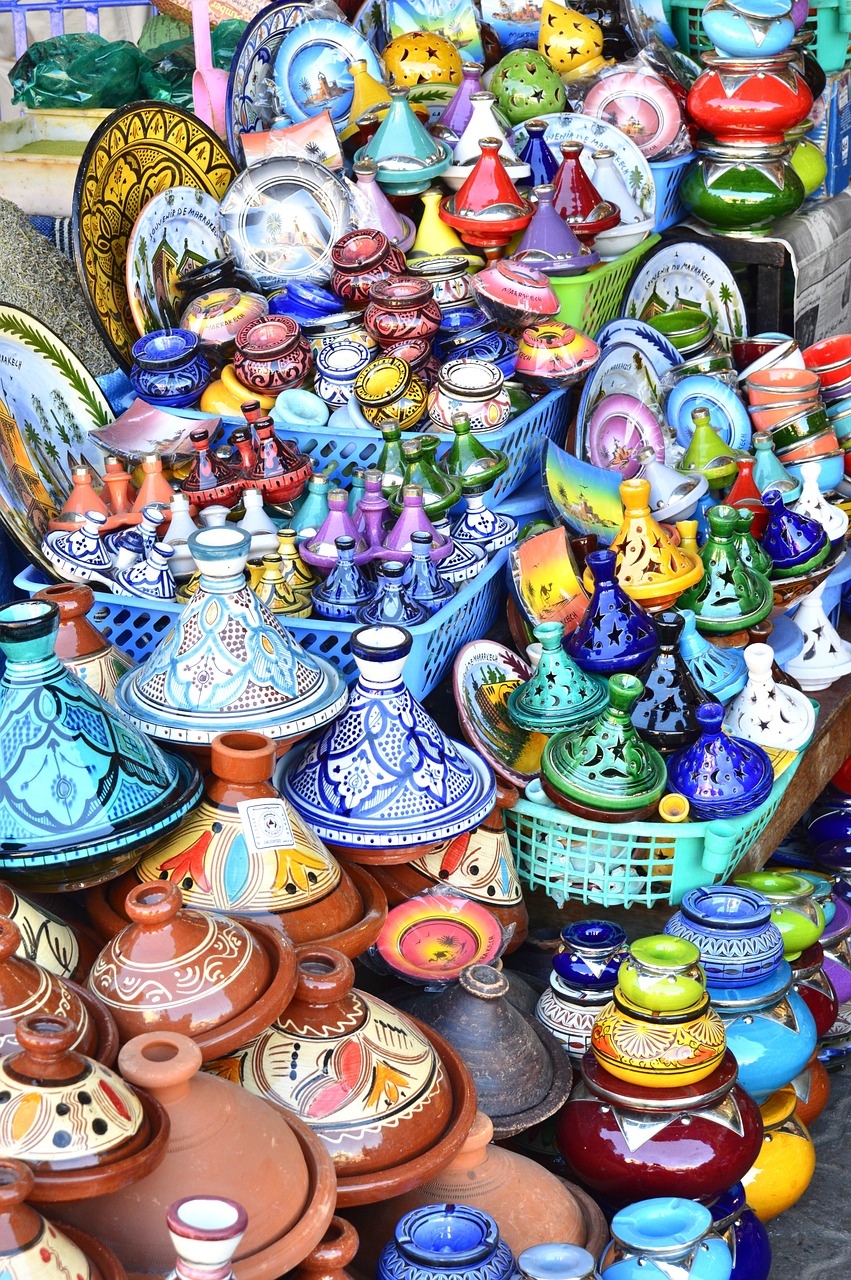
Moroccan ceramics are not only aesthetic but also functional. From dishes and tajines to vases and plates, each piece can be used daily. The popularity of Moroccan ceramics continues to grow, attracting art lovers and designers from around the world.
Moroccan ceramics are an essential part of the country’s cultural heritage. They represent a unique craft, passed down through the centuries.