The Merinid dynasty dominated the Morocco from the 13th to the 15th century. Known for their military skill and their resilience, the Merinids strengthened their influence in North Africa and carried out numerous campaigns to defend and expand their territory.
The Merinids succeeded the Almohads after taking Marrakech in 1269. Their founder, Abu Yusuf Yaqub, consolidated their power by unifying the Berber tribes and by repelling rival Christian and Muslim forces. One of the Merinids’ main objectives was to reconquer Al-Andalus, lost to the Christian kingdoms.
One of the Merinids’ most important battles was the battle of Rio Salado in 1340. Led by Sultan Abu al-Hasan Ali, this battle saw Merinid forces face the combined armies of Castile and Portugal. Despite their defeat, the Merinids demonstrated their ability to mobilize powerful armies and to conduct complex campaigns.
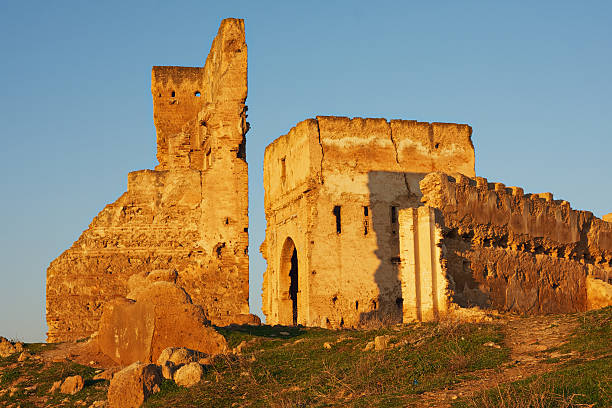
The Merinids also built fortresses and citadels to protect their borders and trade routes. Cities like Fès and Meknès became economic and cultural centers under their rule. The construction of the Bou Inania madrasa in Fès is an example of their commitment to promoting education and Islamic architecture.
Their army included Berber horsemen, African mercenaries and Arab archers. The Merinids used harassment and siege tactics to weaken their enemies before launching decisive attacks. Their naval fleet was also important for controlling maritime routes and protecting the Moroccan coasts.
Despite their military successes, the Merinids faced internal and external challenges. Tribal revolts and dynastic conflicts weakened their power. In addition, the growing pressure from the Christian kingdoms of Spain and Portugal complicated their position in Al-Andalus.
The end of the Merinid dynasty is marked by the emergence of the Wattasids in the 15th century. The latter took control of Fès, bringing an end to Merinid domination. Nevertheless, the legacy of the Merinids endures in Morocco’s architecture, culture and military history.
The Merinids made their mark on their era through their military strategy and resilience. Their legacy continues to fascinate and inspire. They contributed greatly to Morocco, to its culture and its history. The peoples of the past have left their marks, which are still visible in Morocco today.
The Merinids, or Beni Merin, take their name from Merin, son of Wartajan, himself a descendant of a certain Wassin, a descendant of Zanat. The Merinids originate from the Zab (or Zibans) in the eastern Maghreb.