The traditional Moroccan music and dance are vibrant expressions of the country’s culture and history. These arts, deeply rooted in the daily lives of Moroccans, vary from one region to another, reflecting Morocco’s diversity and richness.
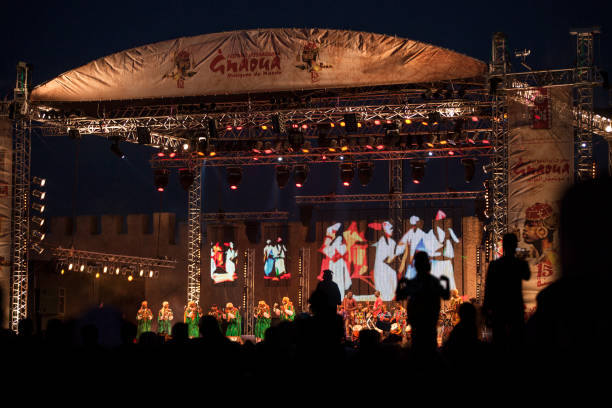
Gnaoua music is one of the most emblematic forms of Moroccan music. Of African origin, it is characterized by hypnotic rhythms and spiritual songs. Gnaoua musicians use traditional instruments such as the guembri, a three-stringed lute, and the qraqebs, metal castanets. This music is often associated with trance and healing rituals.
The Andalusian music, a legacy of Muslim Spain, is another essential component of Moroccan musical culture. It is distinguished by its refined melodies and complex rhythms. Played on major occasions, this music is performed with instruments such as the oud (lute), the <strong qanoun (zither) and the violin. The noubas, traditional musical suites, are the heart of Andalusian music.
Amazigh (Berber) songs are also an important part of the Moroccan musical heritage. Each Amazigh region has its own styles and instruments. The songs of the Tuareg, for example, are accompanied by the imzad, a single-stringed violin, while those of the Atlas use drums and flutes. These songs often tell stories of daily life, nature, and spirituality.
The chaâbi is an urban popular music, played at celebrations and weddings. It is characterized by simple, catchy lyrics and danceable rhythms. Instruments commonly used in chaâbi include the derbouka (tambourine), the ney (flute) and the loutar (lute). This musical genre is much loved for its festive and convivial nature.
The traditional Moroccan dances are just as varied and rich. The guedra, a dance of the Tuareg, is a ritual, hypnotic dance, while the houara is a collective dance from the Souss region, marked by fast and synchronized movements. The dakha is a popular dance from the Marrakech area, often accompanied by singing and percussion.
Music festivals such as the Festival Gnaoua d’Essaouira, the Festival of Sacred Music of Fès, and the Timitar Festival in Agadir celebrate this musical diversity. These events attract artists from around the world and highlight the richness of Morocco’s musical heritage.
Traditional Moroccan music and dance are living expressions of the country’s soul. They reflect a rich history and a diverse culture, offering a fascinating spectacle to those who discover them.